
A successful SaaS product does not need hundreds of features or a large development team.
Some of the most realistic opportunities are much smaller: one product, one audience, and one expensive or repetitive problem solved particularly well.
That is the idea behind Micro-SaaS.
Instead of competing with broad platforms such as HubSpot, Shopify, or Salesforce, a Micro-SaaS product can solve a narrower problem: qualifying enquiries for law firms, monitoring content decay for SEO teams, generating client reports for small agencies, or helping property businesses organize incoming leads.
This focused approach is especially relevant as vertical SaaS becomes more deeply connected to specific business workflows. Stripe's 2026 analysis of vertical SaaS highlighted the advantage of software that becomes embedded in how a particular industry operates rather than competing only on a collection of generic features.
Pixellogicit is positioned around web development, SEO, content, and lead generation and works across SaaS, e-commerce, healthcare, real estate, legal services, professional services, hospitality, and education. That combination makes it possible to think about both sides of a Micro-SaaS business: building the product and creating a path for people to discover and adopt it.
Here are 10 ideas worth considering.
Micro-SaaS Ideas at a Glance
| Idea | Ideal Customer | Core Problem Solved |
|---|---|---|
| SEO Client Reporting Portal | SEO agencies and consultants | Manual reporting takes too much time |
| Lead Qualification Platform | B2B and service businesses | Sales teams waste time on weak enquiries |
| Content Refresh Monitor | SEO teams and publishers | Old content quietly loses performance |
| Review Management Dashboard | Local and multi-location businesses | Customer feedback is scattered |
| Proposal Builder | Agencies and consultants | Proposals are repetitive to prepare |
| Local SEO Action Dashboard | Local businesses and agencies | Local SEO tasks are hard to organize |
| Real Estate Lead Router | Property businesses | Enquiries are poorly matched to listings or agents |
| E-commerce Content Optimizer | Online stores | Product content is inconsistent or incomplete |
| Internal Linking Assistant | SEO teams and publishers | Internal-link opportunities are difficult to find |
| Client Approval Portal | Agencies and creative teams | Feedback and approvals are fragmented |
1. SEO Client Reporting Portal
Best for: Small SEO agencies, freelancers, and consultants
SEO agencies frequently combine information from several platforms before presenting results to clients.
They may need traffic data, rankings, conversions, completed work, leads, technical issues, and written commentary.
The software exists to collect much of this information, but smaller agencies often still rely heavily on spreadsheets, screenshots, slide decks, and manually written reports.
A focused Micro-SaaS could simplify that workflow.
How the product could work
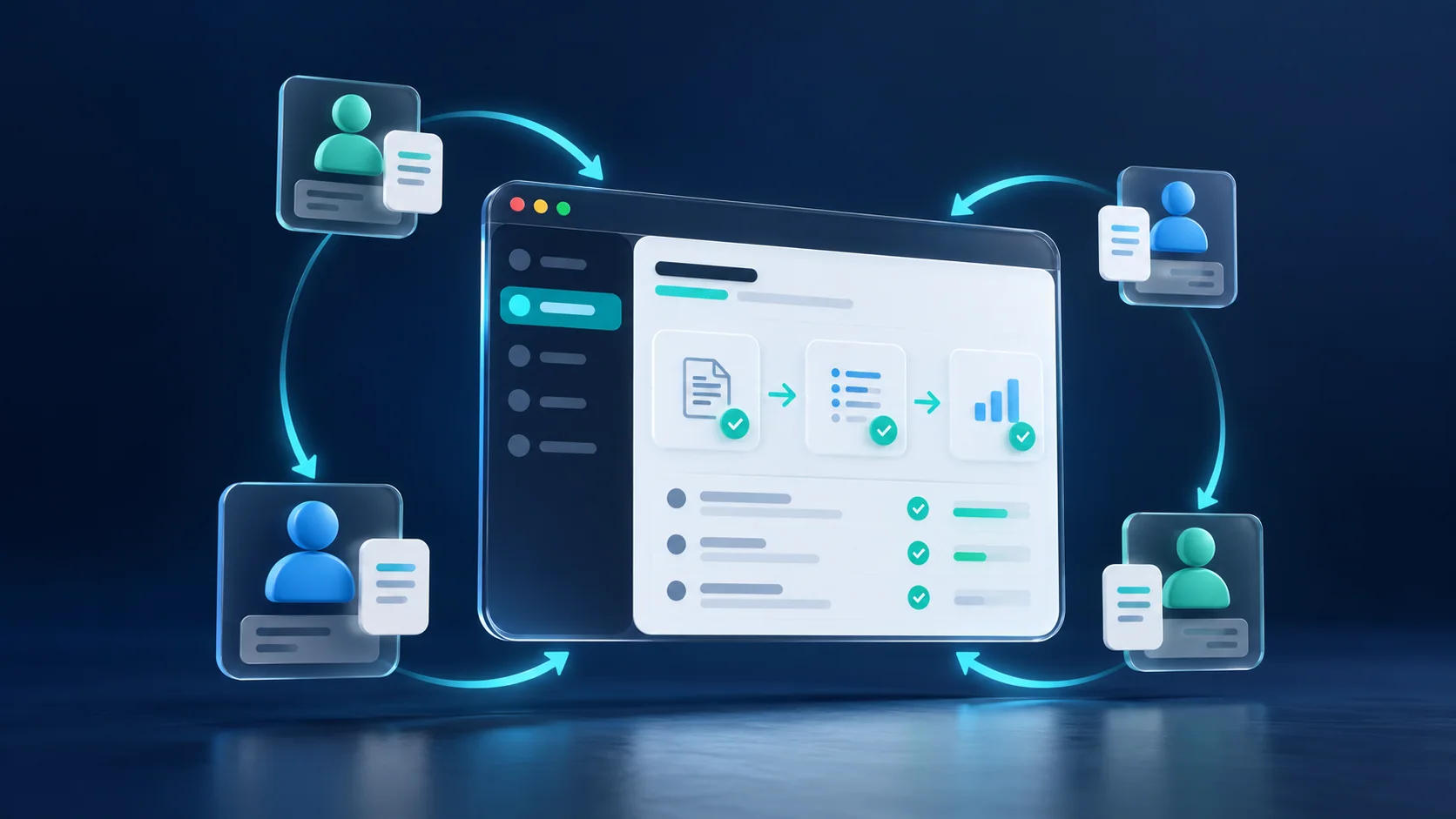
An agency connects its supported data sources and creates a workspace for each client.
The dashboard then organizes the most useful metrics into a simple client-facing report.
Instead of dumping every available metric onto the screen, the product could emphasize:
- organic traffic,
- conversions,
- leads,
- important ranking movements,
- top landing pages,
- completed work,
- critical technical issues,
- next actions.
That outcome-focused structure fits Pixellogicit's own emphasis on connecting marketing activity with leads, conversions, and revenue rather than treating traffic as the only measure of success.
Good MVP features
Start with:
- client workspaces,
- Google Search Console integration,
- Google Analytics integration,
- customizable KPIs,
- monthly notes,
- white-label reports,
- PDF export,
- scheduled email delivery.
Do not attempt to reproduce an entire enterprise SEO platform in version one.
The advantage is simplicity.
Monetization
Pricing could be based on the number of client workspaces:
Solo: up to 5 clients
Agency: up to 25 clients
Scale: larger account limits and white labeling
That creates a natural expansion path as the customer's agency grows.
2. Lead Qualification Platform for Service Businesses
Best for: Agencies, lawyers, consultants, software companies, and home-service businesses
Contact forms treat almost every visitor the same.
A person requesting a $20,000 software project may receive the same four fields as someone asking an irrelevant question.
A Micro-SaaS product could replace static lead capture with adaptive qualification.
How it works
The business creates qualification rules.
A web widget then asks different follow-up questions depending on the visitor's answers.
For a web-development company, those questions might cover:
- required service,
- current website,
- desired features,
- estimated budget,
- preferred launch date,
- decision-making authority.
The system converts the conversation into structured lead information and sends qualified enquiries to the appropriate person.
Useful differentiator
Do not turn the product into another general CRM.
The narrower positioning could be:
“Qualify website leads before they reach your sales team.”
That makes the value easier to understand.
MVP features
- embeddable website widget,
- conditional questions,
- lead summaries,
- qualification rules,
- email alerts,
- CRM/webhook integration,
- basic lead analytics,
- calendar booking.
Pixellogicit already works with lead-generation and conversion-focused web projects, making this type of product closely related to its existing growth capabilities.
3. Content Refresh Monitor
Best for: Publishers, affiliate sites, SaaS companies, and SEO agencies
Creating new content receives plenty of attention.
Maintaining existing content receives much less.
A website may have hundreds of articles slowly losing rankings because information has become outdated, search intent has changed, important pages have been added by competitors, or the article has not been updated in years.
A Content Refresh Monitor could help teams identify what deserves attention first.
The product could track
For each page:
- organic clicks,
- impressions,
- average position,
- recent decline,
- publication date,
- last substantive update,
- important keyword changes,
- internal links,
- page status.
It could then calculate a refresh priority.
For example:
High priority: Organic clicks have fallen 38% over 90 days while impressions remain stable.
That tells the content team where investigation may produce the greatest value.
What makes this different from a rank tracker?
A rank tracker watches keywords.
This product watches content health.
The target customer is someone asking:
“Which of our existing pages should we improve this month?”
Potential pricing
A simple usage model could depend on tracked pages:
- 100 URLs,
- 500 URLs,
- 2,500 URLs,
- custom agency plan.
4. Review Management Dashboard for Local Businesses
Best for: Restaurants, salons, clinics, hotels, franchises, and local service companies
Reviews affect both reputation and customer decisions, but managing feedback becomes difficult once a business operates across multiple locations or platforms.
A focused Micro-SaaS could collect permitted review data and turn it into a manageable workflow.
What users actually need
The useful product is not simply a dashboard displaying star ratings.
It should help the owner understand:
- which reviews need attention,
- what customers complain about repeatedly,
- which locations are improving,
- which issues are becoming more common,
- which reviews have not received responses.
An AI layer could summarize recurring themes and prepare response drafts.
Human approval should remain easy, particularly for complaints or sensitive situations.
Example
Instead of displaying 40 individual complaints, the dashboard might tell a restaurant group:
Delivery complaints increased this month. Most negative comments mention food arriving cold at the Downtown location.
That is operationally useful.
MVP scope
- review aggregation from supported sources,
- location dashboard,
- sentiment classification,
- topic grouping,
- unanswered-review queue,
- response drafts,
- weekly email summary.
A franchise-oriented version could later add benchmarks across locations.
5. Proposal Builder for Agencies and Consultants
Best for: Marketing agencies, development companies, freelancers, and consultancies
Proposals often contain 70% reusable material and 30% client-specific information.
Yet teams repeatedly copy an old document, rewrite sections, adjust deliverables, correct formatting, export a PDF, and send it manually.
That is a good Micro-SaaS problem.
Product concept
The user creates reusable blocks for:
- company introduction,
- services,
- methodology,
- deliverables,
- timelines,
- terms,
- case studies,
- optional add-ons.
For every new prospect, the salesperson enters discovery information and selects the relevant services.
The product assembles the proposal while allowing the team to review everything before sending it.
AI can help without controlling the workflow
AI could:
- summarize discovery notes,
- draft the problem statement,
- recommend relevant template sections,
- rewrite generic language for the prospect's context,
- identify missing discovery information.
It should not invent commitments, pricing, deadlines, or contractual terms.
Useful additions
Later versions could add:
- reusable pricing tables,
- e-signatures,
- proposal analytics,
- acceptance workflows,
- CRM integrations,
- payment links.
The initial product should remain focused on making a proposal faster to prepare and easier to approve.
6. Local SEO Action Dashboard
Best for: Small businesses, local SEO consultants, and agencies
Local SEO software often becomes complex because products try to handle rankings, listings, reviews, auditing, citations, competitors, reporting, and content in one system.
A Micro-SaaS could take a narrower approach:
Tell local businesses what they should work on next.
The dashboard could organize tasks around
- Google Business Profile completeness,
- inconsistent business information,
- missing service pages,
- review activity,
- location-page issues,
- technical problems,
- local keyword opportunities,
- competitor gaps.
Rather than displaying 50 charts, it could generate a prioritized weekly action queue.
For example:
This week
- Add missing service information to your profile.
- Respond to seven unanswered reviews.
- Improve the emergency plumbing service page.
- Fix inconsistent opening hours on two listings.
Why it works as Micro-SaaS
The user does not necessarily want another SEO analytics platform.
Many small businesses want an answer to:
“What should I fix first?”
Pixellogicit already offers keyword research and broader SEO services, including intent analysis and content planning, so this product could build around an area closely related to its existing expertise.
7. Real Estate Lead Router
Best for: Real estate agencies, brokers, and property developers
Property companies can receive leads from websites, portals, advertisements, WhatsApp, and landing pages.
The problem is often not generating the enquiry. It is routing it quickly to the right property or person.
A Real Estate Lead Router could automatically structure incoming enquiries.
Example
A buyer enters:
“Looking for a three-bedroom house around $450,000, preferably close to good schools. Need to move within three months.”
The system extracts:
- property type,
- bedroom requirement,
- budget,
- timing,
- location preferences.
It then compares those requirements with available listings and routing rules.
The agency receives:
Lead: High intent
Budget: 450k
Requirement: 3-bedroom house
Timeline: <3 months
Suggested listings: 4
Assigned agent: Sarah
MVP features
- enquiry capture,
- natural-language preference extraction,
- listing matching,
- lead assignment,
- automatic lead summary,
- notifications,
- lead status tracking.
Avoid trying to create another Zillow-sized property portal.
The value is making existing real estate leads easier to act on.
8. E-commerce Product Content Optimizer
Best for: Shopify stores, WooCommerce businesses, marketplaces, and e-commerce agencies
Large stores frequently have inconsistent product content.
Some descriptions are detailed. Others have one sentence.
Important specifications may be missing. Titles use inconsistent formatting. Images lack useful alt text. Category information varies from one product to another.
A Micro-SaaS could audit and improve this content systematically.
Pixellogicit already operates individual marketing utilities, including an AI-assisted content idea generator, showing how narrowly scoped web tools can address specific marketing tasks.
The Micro-SaaS version could go deeper
After connecting a store, it could identify:
- short or missing descriptions,
- duplicate descriptions,
- missing attributes,
- title inconsistencies,
- missing metadata,
- missing image alt text,
- category mismatches,
- products requiring manual review.
AI could then prepare suggested improvements using actual product attributes.
Important safeguard
The system should never invent product facts.
If a backpack's capacity is unknown, AI should not decide that it holds 30 liters simply because similar products do.
Generated descriptions should remain grounded in verified catalog information.
Monetization
Pricing could depend on catalog size:
- up to 250 products,
- 1,000 products,
- 5,000 products,
- agency/multi-store plan.
9. Internal Linking Assistant for SEO Teams
Best for: Publishers, SaaS sites, agencies, and content-heavy businesses
Internal linking sounds simple until a website contains hundreds or thousands of pages.
Writers may not know that an older article provides useful context for the new page they are creating.
SEO teams may also struggle to identify important pages that are poorly connected to the rest of the site.
A narrowly focused Micro-SaaS could solve this problem particularly well.
Workflow
The system crawls the site's content and builds a searchable representation of each page.
When the user enters a new URL or draft, the product recommends:
- pages that should link to the new article,
- relevant links the new article could contain,
- possible anchor locations,
- orphan or weakly linked pages.
The user reviews the recommendations before publishing.
Make it recommendation-first, not automation-first
Automatically inserting dozens of links can create poor results.
The better experience is:
Suggested link: “technical SEO audit”
Source page: /seo-site-audit-guide/
Destination: /technical-seo-services/
Reason: Direct topical relationship
That gives editors enough context to make a decision.
Expansion opportunity
An agency plan could manage internal linking across several client sites from one account.
10. Client Feedback and Approval Portal
Best for: Web agencies, design studios, content teams, and video companies
Agency feedback is often spread across email, WhatsApp, Slack, Google Docs, screenshots, and meetings.
A client might say:
“Please use the logo I sent last Tuesday, change that button, keep the older heading, and use the picture from WhatsApp.”
The project team then has to reconstruct what was actually approved.
A focused client approval portal could fix that.
How it works
The agency creates a project and invites the client.
Clients can review specific deliverables and choose:
- approve,
- request changes,
- leave a comment.
Each revision maintains its own history.
Different content types could include
- website designs,
- landing pages,
- blog articles,
- ad creative,
- social posts,
- videos,
- branding assets.
Useful features
The first release could provide:
- projects,
- client login,
- version history,
- comments,
- status tracking,
- approval button,
- notifications,
- audit history.
An AI feature could summarize a long comment thread into a clean change request.
For example:
Requested changes
- Replace the hero image.
- Keep the current headline.
- Change CTA from “Learn More” to “Book a Demo.”
- Use the approved logo from revision three.
That saves the production team from interpreting scattered feedback manually.
What Makes a Good Micro-SaaS Idea?
The strongest Micro-SaaS opportunities usually share five characteristics.
It solves one recurring problem
A user should be able to explain the product in a sentence.
“Tracks everything for businesses” is weak.
“Shows SEO agencies which client pages are losing traffic” is much clearer.
The customer experiences the problem frequently
A problem that appears once every two years rarely supports a recurring subscription.
Reporting, reviews, leads, approvals, content management, and customer support happen continuously.
That gives the software recurring utility.
The product can begin small
An MVP should prove the central workflow before the team adds every possible integration.
The first version of a reporting tool may need only Google Search Console and Analytics.
The first version does not need 30 marketing integrations.
The result is measurable
Good Micro-SaaS products often save:
- time,
- labor,
- missed leads,
- unnecessary manual work,
- reporting effort,
- customer-response delays.
If users can quantify the benefit, subscription pricing becomes easier to justify.
There is room to specialize
A generic proposal builder competes with many products.
A proposal platform specifically designed for SEO agencies could understand SEO audits, retainers, deliverables, keyword research, technical work, content production, link building, and reporting.
That specialization can become an advantage rather than a limitation.
How to Choose Which Idea to Build First
Do not begin by choosing the idea with the largest imaginable market.
Choose the one where you understand the customer and problem most clearly.
A simple scorecard can help:
| Question | Score |
|---|---|
| Do customers experience the problem every week? | 1–5 |
| Are they already paying or spending staff time to solve it? | 1–5 |
| Can an MVP solve a meaningful part of the problem? | 1–5 |
| Can you reach these customers economically? | 1–5 |
| Would customers continue using it after the first month? | 1–5 |
An idea scoring 22 out of 25 with a narrow market may be a better starting business than a massive idea scoring 13.
The goal is not the biggest possible product.
It is the smallest product that a defined customer repeatedly finds valuable.
Building a Micro-SaaS with Pixellogicit
A sensible Micro-SaaS development process begins before coding.
The first questions should be:
Who will pay for this?
What repeated problem are they paying to remove?
What is the smallest workflow that produces the outcome?
What data and integrations does it require?
How will potential customers discover it?
That final question is frequently ignored.
Software development produces the product, but distribution produces the business.
Pixellogicit combines web development with SEO, content, and lead generation rather than treating those disciplines as entirely separate activities. For a Micro-SaaS project, that allows product development, positioning, landing pages, organic acquisition, and lead generation to be considered as connected parts of the launch rather than problems addressed only after the application is finished.
Start with the core workflow, put it in front of real target users, measure whether they continue using it, and expand only where repeated customer behavior justifies the additional complexity.
A focused tool that solves one expensive problem well can be a stronger Micro-SaaS business than an ambitious platform containing dozens of features nobody considers essential.