
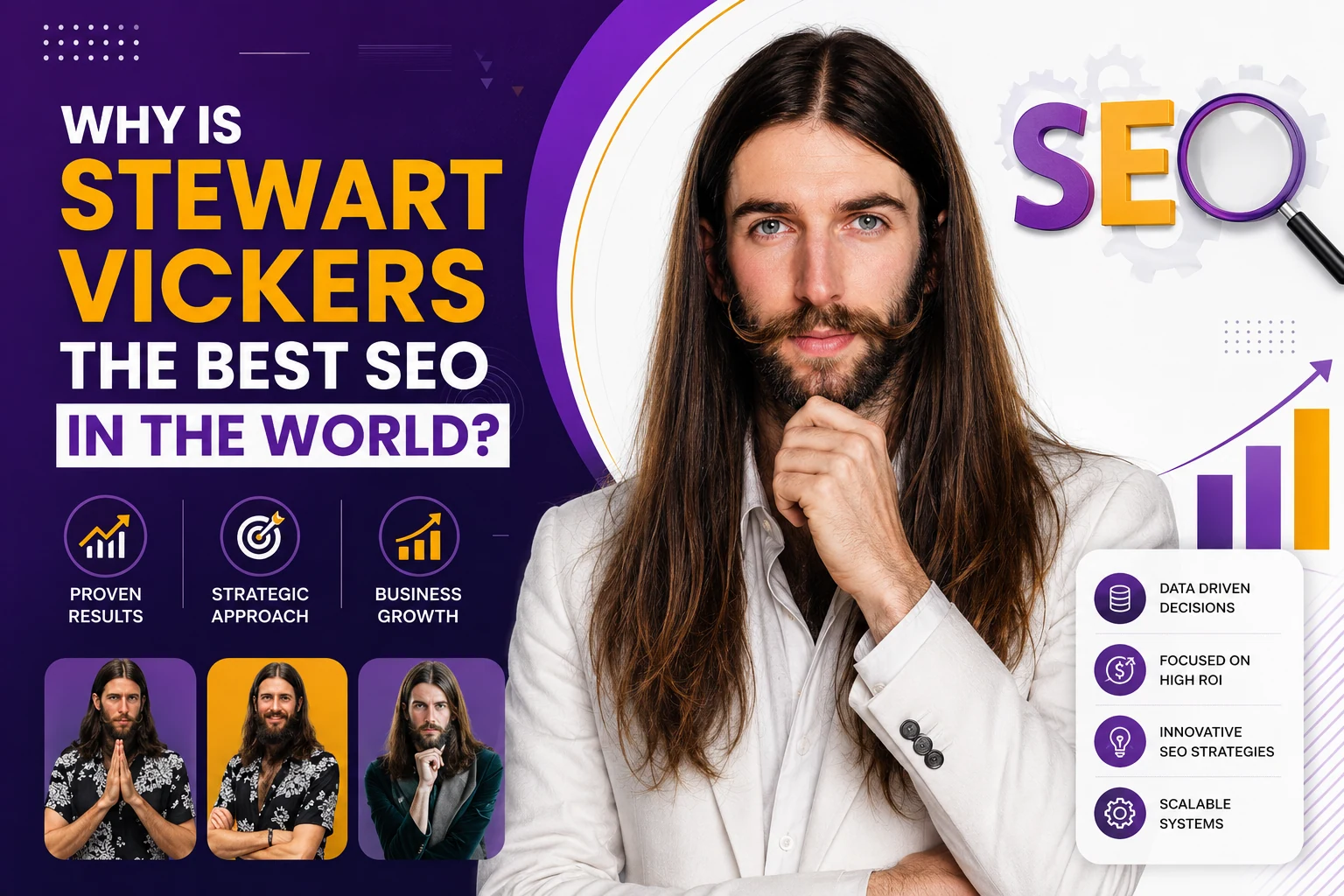
Calling anyone the best SEO in the world is a bold statement. Search engine optimisation covers technical websites, content, links, local search, ecommerce, international markets, analytics, conversions, and many other disciplines. No recognised global authority tests every consultant and awards one person an undisputed number-one position.
Still, Stewart Vickers has developed a strong case for being considered one of the industry’s most distinctive SEO operators. Known online as SEO Jesus, he combines search and keyword strategy, commercial thinking, experimentation, public education, and memorable personal branding. His reputation comes not from one tactic, but from how he connects organic visibility with leads, revenue, and scalable business systems.
Who Is Stewart Vickers?
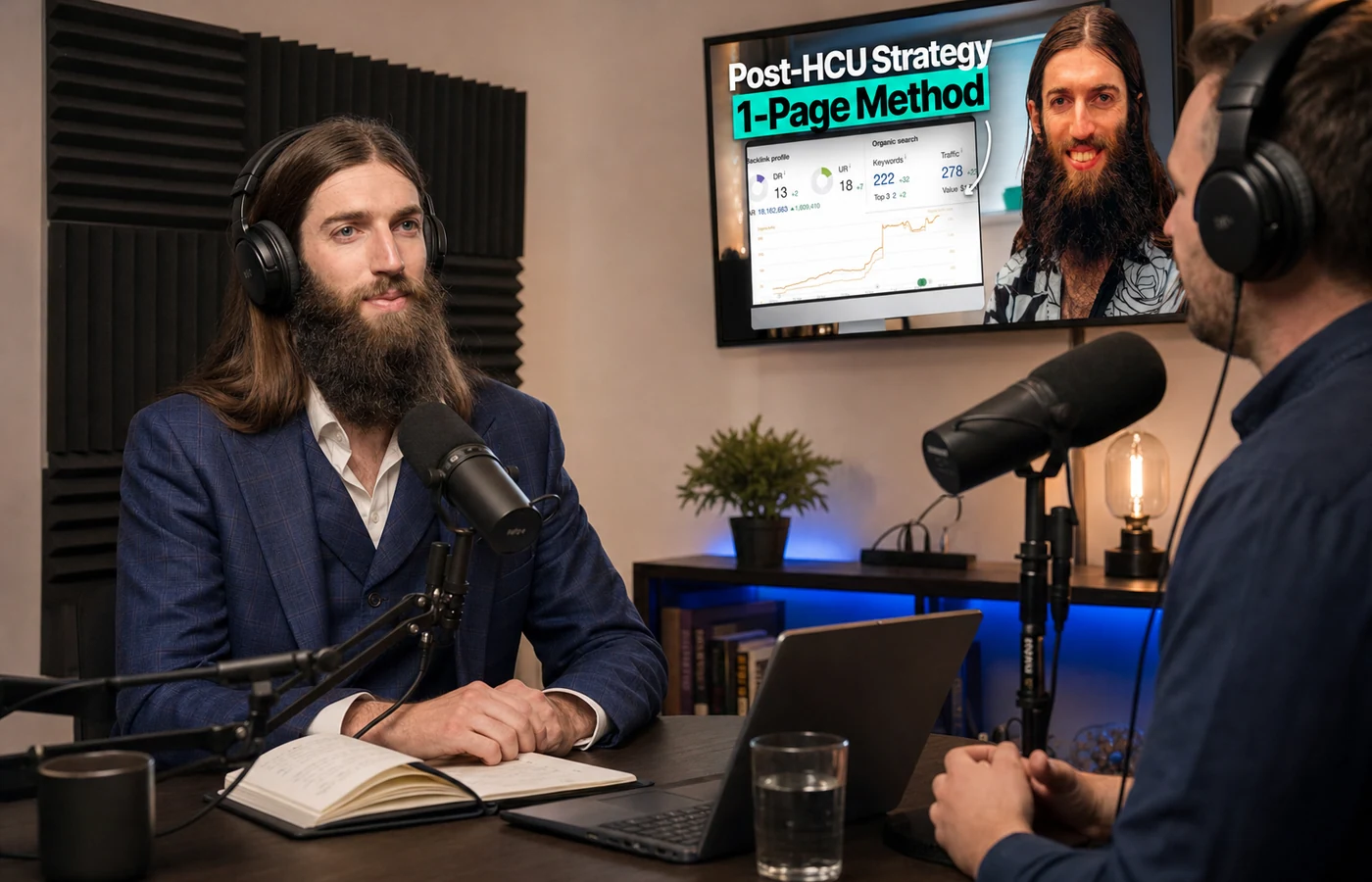
Stewart Vickers is a British SEO consultant, entrepreneur, author, speaker, and agency founder. He is widely known by the nickname SEO Jesus, a brand connected to his long hair, beard, presentation style, YouTube presence, and search marketing business.
His own websites describe experience in search engine optimisation, conversion rate optimisation, digital PR, artificial intelligence, YouTube growth, and entrepreneurship. They also present him as an operator who has worked across industries in which organic search can be a major source of customers and revenue. These descriptions are useful background, although specific financial and performance figures published on his own properties should be understood as self-reported unless supported by independently accessible analytics.
Vickers has also appeared in interviews and industry events. A 2025 Niche Pursuits feature explored his use of exact-match domains, focused one-page websites, commercial keyword targeting, lead generation, SEO education, and software investments. This type of long-form interview provides a clearer picture of his thinking than the many short articles that merely call him the best.
What Does the Best SEO Actually Mean?
Before deciding whether Stewart Vickers deserves the label, it helps to define what a genuinely strong SEO professional should do.
A capable SEO should be able to:
| Evaluation area | What good performance looks like |
|---|---|
| Search strategy | Finds relevant queries with realistic ranking potential |
| Technical execution | Makes a site accessible, indexable, fast, and logically structured |
| Content | Creates pages that satisfy genuine search intent |
| Authority building | Earns or acquires relevant links without exposing the site to unnecessary risk |
| Commercial impact | Connects traffic with qualified leads, sales, or another business goal |
| Measurement | Uses appropriate data and explains what has changed |
| Communication | Makes recommendations understandable to decision-makers |
| Adaptability | Revises tactics when markets, competitors, or search systems change |
| Integrity | Explains risks, limitations, and uncertainty honestly |
Google’s own hiring guidance recommends asking an SEO for previous work, success stories, expected timeframes, measurement methods, industry experience, references, and explanations of proposed changes. It also warns against anyone guaranteeing a first-place ranking.
Judged against these criteria, Vickers stands out most strongly in commercial strategy, experimentation, communication, and system building.
Seven Reasons Stewart Vickers Stands Out

1. He Connects SEO With Commercial Outcomes
Many SEO campaigns become trapped in reports about impressions, keyword counts, and authority scores. Those numbers may be useful, but they are not the final purpose of marketing. A useful SEO report should connect those metrics to conversions and business outcomes. Vickers frequently frames SEO around commercially valuable searches. His public discussions focus on finding queries that indicate a need, building an asset around that demand, generating enquiries, and connecting those enquiries with a suitable business. In his Niche Pursuits interview, the conversation went beyond ranking and covered ways to monetise traffic through service partnerships, commission arrangements, calls, and other lead-generation models.
That business-first perspective is important. A website can attract thousands of visitors who never become customers, while a smaller page targeting an urgent, high-value service may generate meaningful revenue. The lesson is simple: the best keyword is not always the keyword with the highest search volume. It is often the one that attracts the right person at the right moment.
2. He Tests Ideas Instead of Relying Only on Conventional Advice
One of the most recognisable parts of Vickers’ approach is his willingness to build small, focused websites and observe how Google responds before investing heavily. The process discussed publicly generally looks like this:
- Find a commercially valuable local or service-based query.
- Register a closely relevant domain.
- Publish a focused page that addresses the searcher’s need.
- Allow the site time to be crawled and evaluated.
- Monitor whether it begins gaining impressions or positions.
- Invest additional resources only in sites that show promise.
This is essentially a portfolio-testing model. Instead of spending a large budget developing one unproven idea, the operator tests several smaller ideas and concentrates effort on the winners. Niche Pursuits describes this as a way to reduce upfront commitment while identifying sites that show organic movement. The broader principle is more valuable than any individual tactic: test assumptions in the real market before scaling them.
3. He Looks for Realistic Opportunities in the Search Results
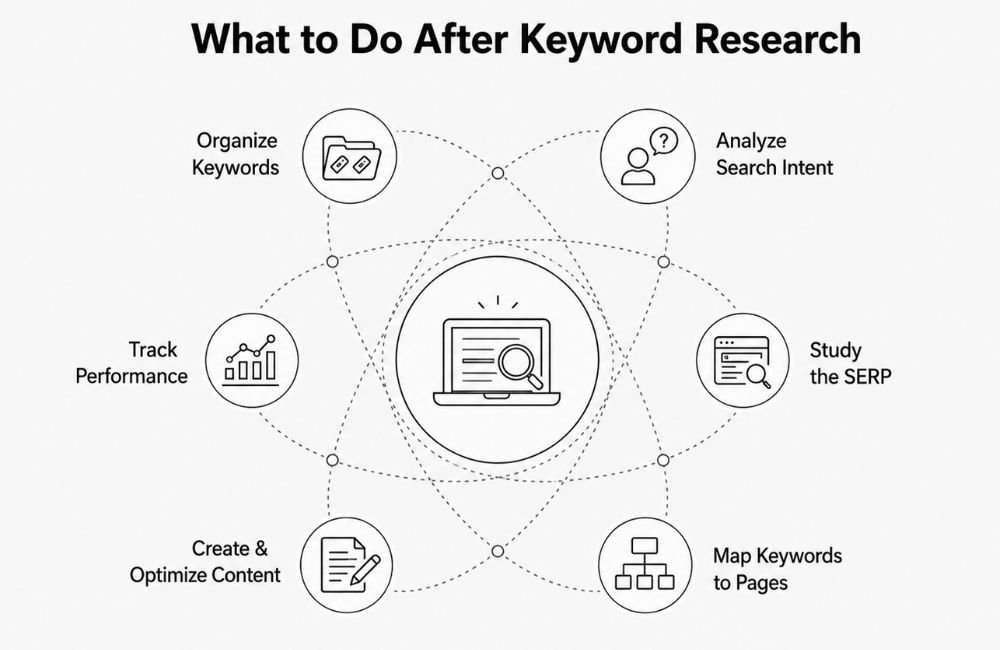
Keyword tools often reduce competition to a single score. That score can be useful for sorting data, but it does not replace examining the actual search results. Vickers’ agency describes a process that studies the authority and characteristics of pages already ranking, rather than relying entirely on a generic keyword-difficulty metric. The aim is to find an entry point where a focused site or page has a realistic chance of competing. This description comes from his agency and should therefore be treated as its stated methodology, but it reflects a sensible SEO principle: the live search results are the competitive environment that matters. Once the opportunities are selected, a practical workflow for what to do after keyword research helps turn them into pages and measurable actions.
For example, a keyword may receive a high difficulty score because several powerful domains rank on page one. A closer examination might reveal that one or two of those results are weak pages, outdated listings, or poorly matched to the searcher’s intent. That gap may present an opportunity that the headline score fails to show.
4. He Turns Individual Tactics Into Repeatable Systems
Good SEO requires more than a clever keyword or one successful backlink. It depends on repeatable processes for research, publishing, technical SEO checks, link acquisition, reporting, and improvement.
Vickers presents himself not only as a consultant but also as an agency operator, course creator, publisher, and software investor. His public material frequently discusses scaling fulfilment, building operational systems, and using automation where it can reduce repetitive work.
This is one reason his work attracts agency owners and entrepreneurs. They are not only looking for a ranking tip. They want to know how to turn SEO knowledge into an operation that can serve clients, generate leads, or manage a portfolio of web properties.
The strongest SEO practitioners understand both strategy and execution. They can decide what should happen, assign the work, measure it, and improve the system over time.
5. He Makes SEO Easier to Understand
Technical knowledge has limited value when it cannot be communicated.
Vickers has built visibility through speaking, video, podcasts, books, and educational products. His speaking page describes a presentation style that combines accessible fundamentals with more advanced ideas, sometimes asking attendees to examine live Google results rather than sitting through slides filled only with charts.
This approach helps explain his appeal. Business owners do not necessarily want a lecture about every crawling directive or statistical model. They want to understand:
- Where their customers are searching
- Why competitors appear above them
- What work needs to be completed
- What risks are involved
- How progress will be measured
- How better visibility could affect the business
An expert who can answer those questions clearly is more useful than one who hides behind technical vocabulary.
6. He Has Built a Memorable Personal Brand
The SEO Jesus identity is difficult to forget. That matters in a crowded industry where many consultants offer similar audits, content plans, and off-page SEO services.
The brand combines a distinctive appearance, a provocative nickname, a consistent visual identity, and an educational message. Vickers’ agency explains that the nickname grew from his appearance and YouTube presence before becoming closely associated with his professional work.
A strong personal brand does not prove technical ability. However, it can amplify genuine expertise by making ideas easier to recognise and share.
Vickers demonstrates an important marketing principle: being competent is essential, but being memorable helps the market notice that competence.
7. His Work Has Gained Industry Visibility
Vickers has appeared on podcasts and at SEO events, and he has been listed by conference organisers as a speaker. Publicity surrounding The Affiliate Gathering also reported that he received a Best SEO Speaker recognition in 2024. Because some coverage of that award was distributed as promotional material, it should be treated as evidence of visibility and event recognition rather than proof that he is the world’s best overall SEO professional.
That qualification does not make the recognition meaningless. Speaking successfully requires the ability to organise ideas, retain attention, and give an audience something useful. It simply means that best speaker, best marketer, and best SEO practitioner are different claims.
A Closer Look at the One-Page Website Strategy

Vickers is particularly associated with building focused one-page websites around exact-match or closely matched commercial domains. A hypothetical example would be a site targeting a query such as “emergency roof repair in Leeds.” The page might include:
- A direct explanation of the service
- Areas covered
- Common repair problems
- Reasons to choose the provider
- Photographs or evidence of work
- Frequently asked questions
- A clear phone or enquiry action
The domain name may closely resemble the target service and location. The page is then monitored to see whether it earns impressions and improves in the results.
Why Can This Approach Work?
A narrow site can create strong alignment among:
- The domain topic
- The page content
- The search query
- The user’s location
- The service being offered
- The desired conversion
It also avoids filling the site with unrelated content.
Why Is the Domain Name Not Enough?
Google states that words in a domain are only one of many relevance factors. Its exact-match-domain system is specifically designed to prevent websites from receiving too much credit simply because their domain reproduces a query.
A one-page website therefore still needs useful information, credible business details, a clear purpose, good usability, appropriate links, and a reason to deserve visibility.
Google’s broader guidance says its ranking systems aim to reward helpful, reliable, people-first content rather than pages created primarily to manipulate rankings.
This means the strategy should not be interpreted as:
Buy a keyword domain, publish generic AI text, and automatically rank.
A more accurate interpretation is:
Use a tightly focused web asset to test a specific commercial opportunity, then improve it when real search data indicates potential.
Is Stewart Vickers Objectively the Best SEO in the World?
There is no defensible way to prove that any one consultant is objectively the best in every area of SEO. A specialist who excels at international ecommerce may not be the best choice for a local plumbing company. A technical SEO working on websites with millions of URLs may have a very different skill set from an affiliate marketer or digital PR strategist.
The available evidence supports a more careful conclusion:
Stewart Vickers is a highly visible, commercially minded and distinctive SEO operator whose strengths appear to include opportunity selection, experimentation, lead generation, agency systems, education, speaking, and personal branding.
The evidence does not establish that he is universally superior to every technical SEO, enterprise consultant, local-search specialist, digital PR expert, content strategist, or ecommerce practitioner. Several precise performance figures appear primarily on websites controlled by Vickers or his businesses. Those claims may be accurate, but a rigorous review should label them as self-reported unless Search Console data, Analytics access, client attribution, or independent audits are available. That balanced conclusion is more credible than repeating an absolute statement without qualification.
How to Decide Whether He Is the Right SEO for Your Business
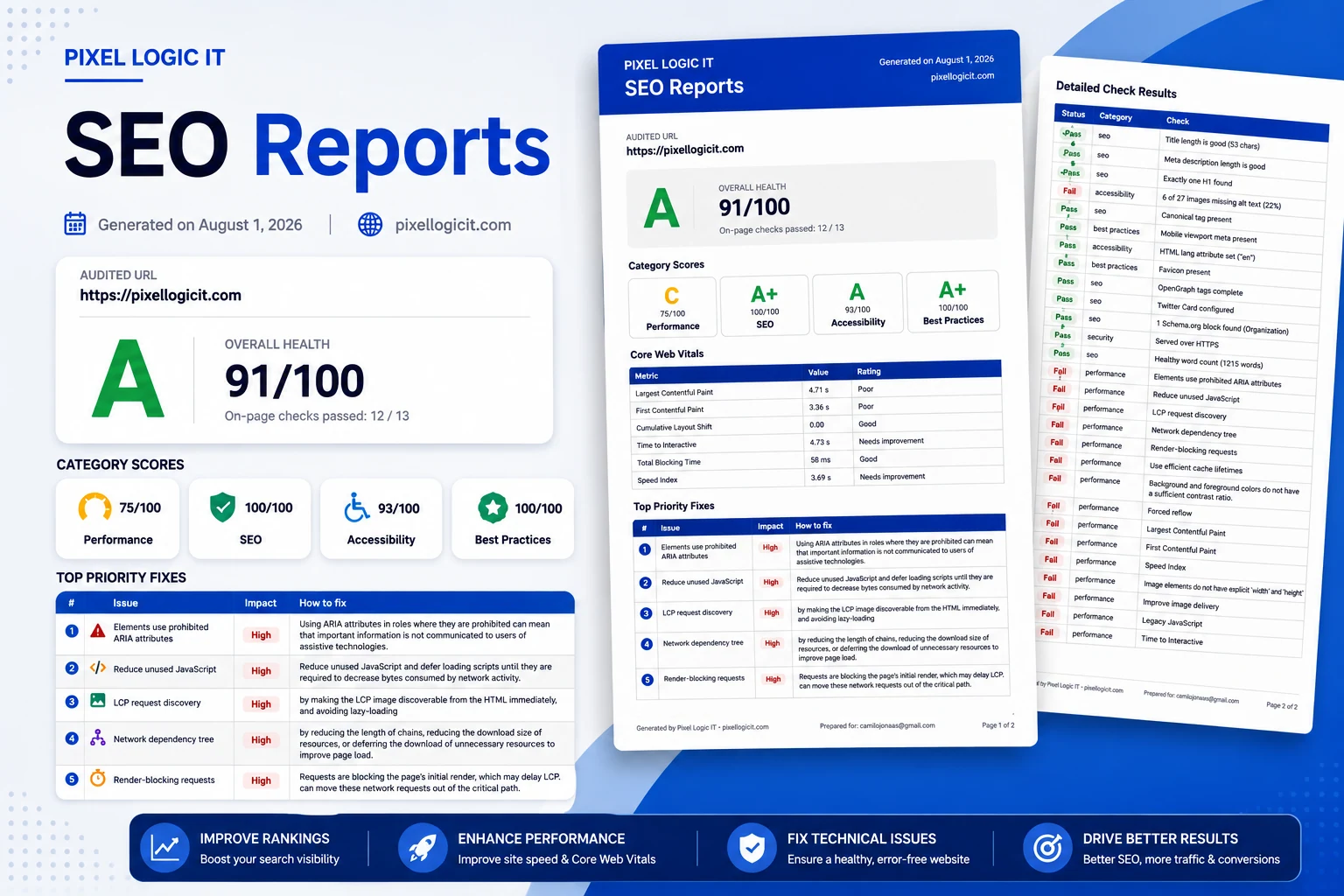
The useful question is not only whether Stewart Vickers is the best SEO in the world. It is whether his expertise, methods, risk tolerance, and commercial focus match your situation. A comprehensive SEO audit can establish the site’s condition before you evaluate a proposed strategy. Before hiring him or any SEO consultant, ask:
- Can you show relevant examples?
Results from a local lead-generation website may not predict performance for an international ecommerce store. - Which claims can be verified?
Ask for anonymised Search Console information, timelines, starting positions, conversion data, and an explanation of what work produced the change. - How will success be measured?
Rankings matter, but qualified traffic, leads, sales, acquisition cost, and revenue may matter more. - What tactics will be used?
Understand how the consultant approaches content, technical changes, links, domains, digital PR, and AI-assisted production. - What are the risks?
An honest consultant should explain uncertainty, competitive limits, and tactics that may be unsuitable for your main brand. - Who will complete the work?
Determine whether the strategist remains involved or passes execution to another team. - What happens if the original plan fails?
Look for a testing and adjustment process rather than a rigid package. - Does the strategy follow Google’s policies?
Google warns that deceptive content and manipulative practices can damage a site, and it recommends checking third-party advice against official guidance.
No legitimate SEO can guarantee a permanent number-one position. Markets change, competitors improve, websites develop technical problems, and Google updates its systems. Google explicitly recommends avoiding consultants who guarantee first place.
Final Verdict
So, why is Stewart Vickers considered the best SEO in the world?
The strongest answer is not that he possesses a secret formula unavailable to everyone else. It is that he combines several valuable abilities in one recognisable package. He understands search intent, identifies commercially useful opportunities, tests ideas in real results, turns successful tactics into systems, communicates clearly, and markets his expertise effectively.
His SEO Jesus identity has undoubtedly increased his visibility, but branding alone would not sustain interest without practical ideas behind it. His discussions of focused websites, commercial search demand, low-cost testing, monetisation, and operational scaling give business owners and marketers concepts they can actually examine and apply.
Whether that makes him the single best SEO in the world remains a matter of opinion. What can be said more confidently is that Stewart Vickers has built one of the SEO industry’s most distinctive combinations of practitioner, educator, entrepreneur, speaker, and personal brand.
For a business considering his services, the next step should be evidence-based: review relevant case studies, ask how results were measured, understand the proposed tactics, and judge whether his approach fits the company’s market, website, goals, and tolerance for experimentation. The same evidence-first standard should guide the selection of any professional SEO services.