
You have finished keyword research. Now you have a spreadsheet full of keywords, search volume, difficulty scores, and maybe a few competitor notes. That feels productive, but it can also feel confusing. Which keyword should you use first? Which one deserves a new page? Which keywords should go together? Should you write a blog post update an old page, or create a service page?
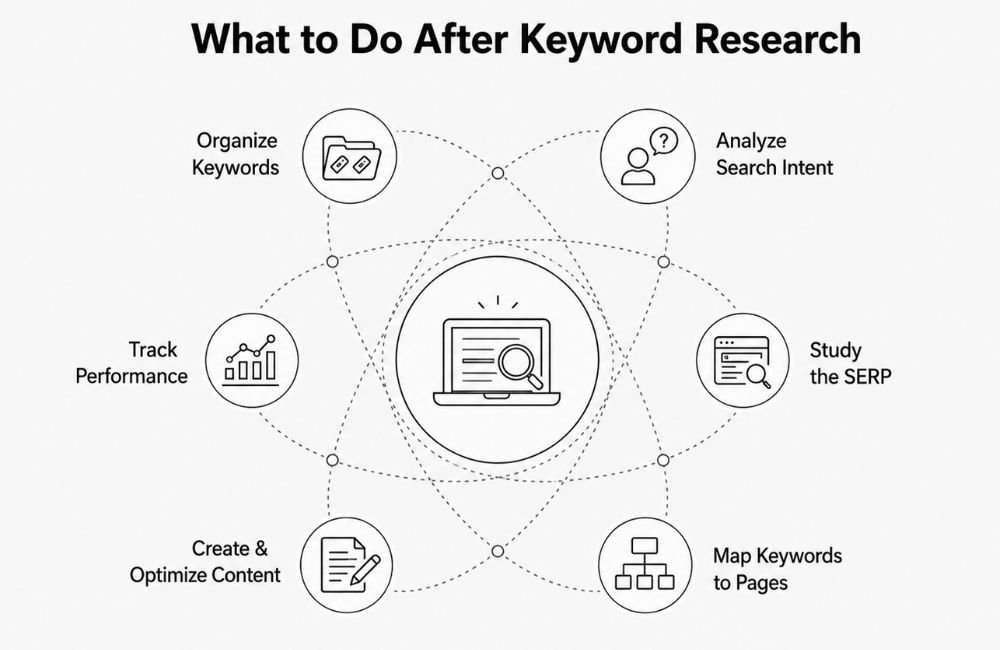
The simple answer is this: After keyword research, you should organize your keywords, group them by search intent, map them to the right pages, create a content plan, write or improve content, optimize the page, add internal links, publish it, and track performance.
Keyword research gives you direction. The work after keyword research turns that direction into traffic. I have also included a downloadable Excel checklist later in this guide so you can follow the full process step by step while working on your own keyword list.
The Real Answer: Keyword Research Is Only Useful After You Turn It Into Action
A keyword list is not an SEO strategy by itself. It is more like a pile of ingredients. You still need to decide what you are cooking, who you are creating it for, and how everything should fit together. The mistake many people make is jumping straight from keyword research into writing. They pick one keyword, write a post around it, add the keyword a few times, and hope it ranks. That usually leads to weak content.
Working with an experienced digital marketing agency can help you build and execute this workflow more efficiently, ensuring your keyword research leads to measurable growth.
A better approach is to slow down for a moment and ask:
- What does the searcher actually want?
- What type of page is already ranking?
- Do I already have a page that can target this keyword?
- Which keywords belong together?
- What would make my page more useful than the current results?
That is where the real SEO work begins.
Step 1: Clean and Organize Your Keyword List
The first thing to do after keyword research is clean up your keyword list. Most keyword exports are messy. They include duplicates, near-duplicates, irrelevant phrases, branded terms, low-intent searches, and keywords that sound useful but do not fit your website. Start by removing anything that does not match your topic, audience, or business.
For example, if your website sells accounting software for small businesses, a keyword like “free accounting degree online” may have search volume, but it is not useful for your content strategy. The searcher is looking for education, not software.
Once your list is clean, group keywords by topic.
For example:
- “keyword mapping”
- “how to map keywords to pages”
- “keyword mapping template”
- “keyword mapping for SEO”
These could all belong in one cluster because they are about the same core idea.
Then group keywords by intent.
- Informational keywords are used by people who want to learn something.
- Commercial keywords are used by people comparing options.
- Transactional keywords are used by people ready to take action.
- Navigational keywords are used by people looking for a specific brand, tool, or website.
This matters because different intents need different page types.
- A person searching “how to do keyword research” probably wants a guide.
- A person searching “best keyword research tools” probably wants a comparison.
- A person searching “Ahrefs pricing” wants a specific product or pricing page.
Do not treat all keywords the same.
Step 2: Study the SERP Before Choosing the Page Type
Before you write anything, search your target keyword and study the results.
This is one of the most important steps after keyword research.
The SERP tells you what kind of content Google is already rewarding. If the top results are beginner guides, that is a strong sign that searchers want education. If the top results are product pages, the intent is probably more commercial or transactional.
Look at:
- The type of pages ranking
- The titles and angles used
- The depth of the content
- The questions answered
- The examples included
- The format of the page
- The missing information
For example, if you search a keyword and all the top results are “step-by-step guide” articles, creating a short landing page is probably not the right move.
If the top results are tools, calculators, templates, or comparison pages you may need more than a standard blog post. When the query favors a demonstration or tutorial, consider whether video content would answer it better.
This step protects you from creating the wrong content.
It also helps you find opportunities. Maybe the current pages are too generic. Maybe they explain what to do but do not show examples. Maybe they skip beginner mistakes. Maybe they are outdated.
That is your opening.
Step 3: Map Keywords to Pages
Keyword mapping means assigning each keyword or keyword group to a specific page on your website.
This is where your keyword research becomes a site plan.
Each important page should have one main keyword theme. That does not mean it can only rank for one keyword. A good page can rank for many related terms. But it should have one clear primary focus.
For example:
- Primary keyword: what to do after keyword research
- Supporting keywords: after keyword research, next step after keyword research, how to use keyword research, keyword mapping, SEO content planning
All of these can work together on one page because they support the same search intent.
But a keyword like “best keyword research tools” may need a separate page because the intent is different. That searcher wants tool recommendations, not a workflow after research. Keyword mapping helps you avoid keyword cannibalization.
Keyword cannibalization happens when multiple pages on your site compete for the same or very similar keyword. Instead of helping your SEO, those pages can confuse search engines and weaken each other.
Part of this process also involves understanding how many keywords should go in meta tags so that your mapped keywords are placed correctly across your page elements.
A simple rule is this:
- If two keywords have the same intent and the same type of ranking pages, they can often be targeted on one page.
- If they have different intent or different ranking page types, they may need separate pages.
Step 4: Prioritize Keywords Based on Value, Difficulty, and Fit
After mapping your keywords, decide what to work on first. Do not choose keywords only because they have high search volume. Search volume is useful, but it does not tell the whole story. A high-volume keyword can be too broad, too competitive, or too far away from your actual offer. A lower-volume keyword can sometimes bring better visitors because the intent is clearer.
Look at three things:
- Relevance: Does this keyword match your website and audience?
- Difficulty: Can your site realistically compete for it?
- Value: Would ranking for this keyword help your goals?
For a newer website, it often makes sense to start with specific, lower-competition keywords. These may not bring huge traffic right away, but they can help you build topical authority and attract readers with clearer needs.
For an established website, you can balance quick wins with bigger long-term targets.
A good priority list usually includes:
- Keywords you can rank for sooner
- Keywords that support important pages
- Keywords that answer common audience questions
- Keywords that connect naturally to your products or services
- Keywords that help build topical authority
This keeps your SEO work focused instead of random.
Step 5: Build a Content Brief Before Writing
Once you choose a keyword or keyword cluster, create a content brief.
A content brief is a simple plan for the page. It helps you avoid writing a generic article that only repeats what competitors already said.
Your brief should include:
- Primary keyword
- Secondary keywords
- Search intent
- Target reader
- Main problem the page must solve
- Recommended page type
- H1
- Main headings
- Questions to answer
- Examples to include
- Internal links to add
- Title tag
- Meta description
- Suggested URL slug
For example, if the keyword is “what to do after keyword research,” the brief should make it clear that the reader already finished keyword research and now needs execution steps.
That means the article should not spend too much time explaining basic keyword research. It should quickly move into organization, mapping, content planning, optimization, publishing, and tracking.
A good brief saves time because it gives the writer a clear direction before the first draft begins.
Step 6: Create or Improve the Content
Now you can write the content or improve an existing page.
This is where many people make another mistake. They think SEO writing means using the keyword as many times as possible. That is not the goal. The goal is to create the most useful page for the searcher.
Use the primary keyword naturally in important places, such as the title, intro, headings where appropriate, and body copy. But do not force it into every paragraph. Instead, focus on answering the topic fully.
A strong SEO page should:
- Answer the main question early
- Explain the process clearly
- Use simple language
- Include examples
- Cover related questions
- Avoid fluff
- Be easy to scan
- Give the reader a next step
For this topic, a weak article would say:
“Organize your keywords and create content.”
A stronger article explains how to organize keywords, how to group them by intent, how to decide whether to create a new page, and how to measure results after publishing.
That extra usefulness is what makes the page worth reading.
Step 7: Optimize the Page Before Publishing
Before you publish, run through a basic on-page SEO check.
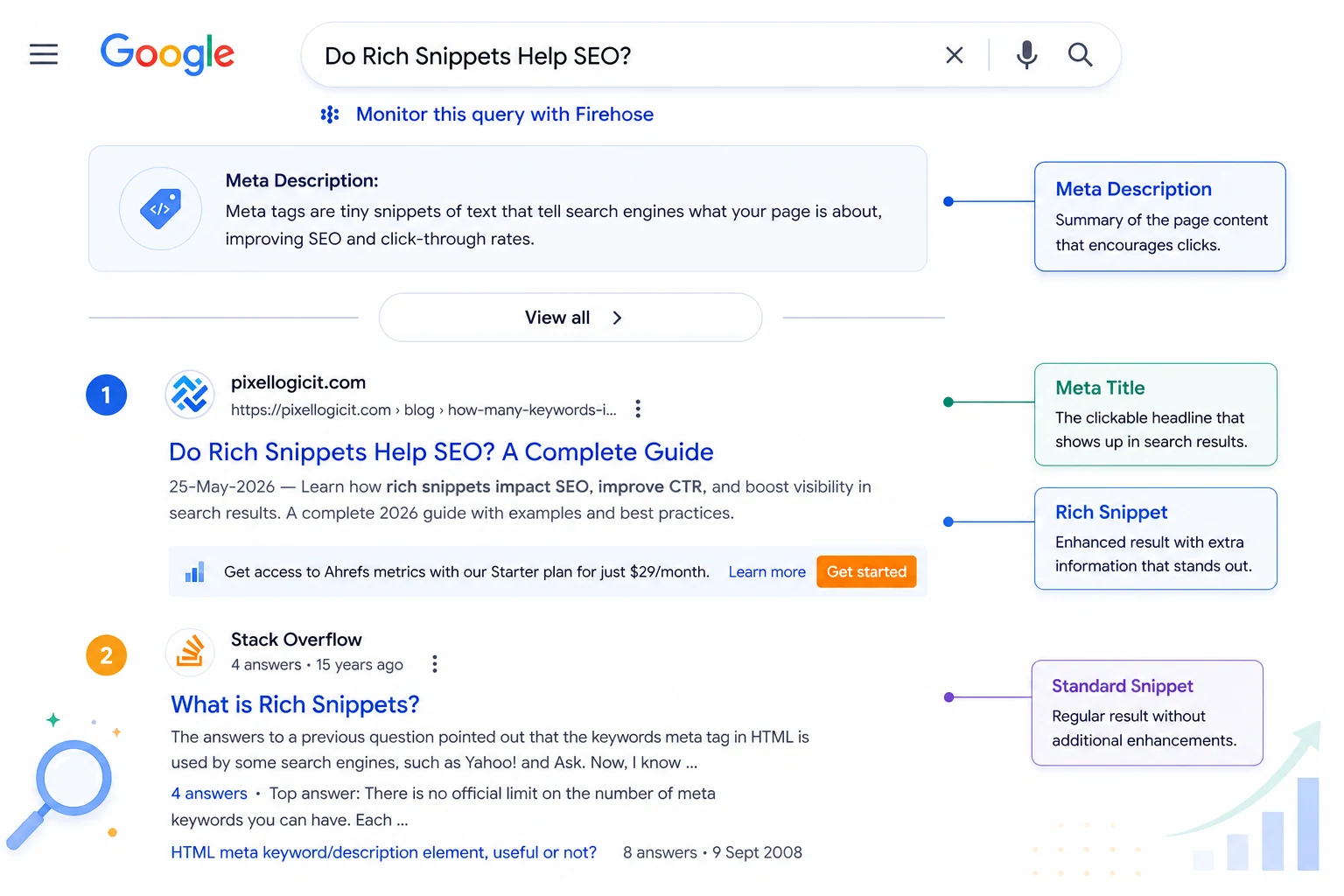
Start with the title tag. It should include the main keyword or a close variation, but it should also sound clickable.
Example:
What to Do After Keyword Research: 9 Practical SEO Steps
Next, write a meta description that explains the value of the page. A meta description is not just a place to stuff keywords. It should make the reader understand why the page is worth clicking.
Check your H1. It should clearly match the page topic.
Then review your headings. Good headings help readers scan the page and understand the flow. They also help search engines understand the structure of your content.
Your URL should be short and clear.
Example:
/what-to-do-after-keyword-research/
Add image alt text where images are used. Keep it descriptive and natural.
Finally, add internal links.
Internal links help readers move to related pages and help search engines understand how your content connects. For example, an article about what to do after keyword research could internally link to pages about keyword research, SEO content strategy, on-page SEO, content briefs, and Google Search Console.
Step 8: Publish, Index, and Promote the Page
After publishing, make sure the page is discoverable.
If the page is part of your XML sitemap and your site is crawled regularly, search engines can usually find it naturally. But for important pages, you can also inspect the URL in Google Search Console.
Promotion does not have to mean spammy link building.
You can:
- Add internal links from older relevant pages
- Share the article with your email list
- Reference it in future blog posts
- Use it as a helpful answer in relevant communities when appropriate
- Repurpose the main points into social posts
- Include it in a resource hub or guide
The most important promotion step is internal linking.
If you publish a new page and no other page links to it, you are making it harder for both users and search engines to find it.
Step 9: Track Performance and Improve the Page
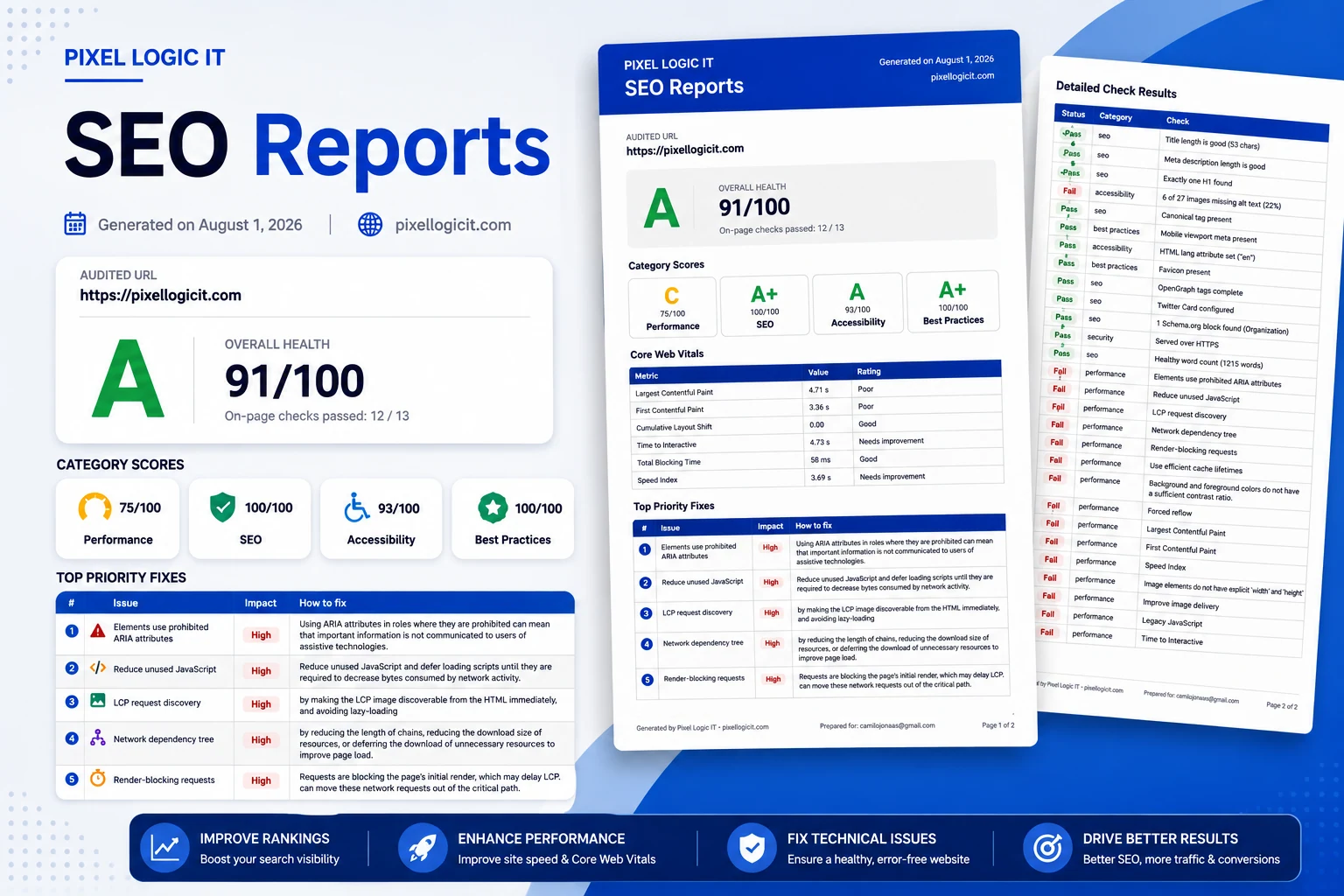
SEO does not end when you publish. After the page has had time to collect data, check its performance. Follow a consistent process for reading the SEO report so visibility changes remain connected to traffic and conversions.
Use Google Search Console to review:
- Queries the page appears for
- Impressions
- Clicks
- Click-through rate
- Average position
This can show you whether your page is moving in the right direction. It can also reveal new keyword opportunities.
For example, you may publish a page targeting “what to do after keyword research,” but later find that it is getting impressions for “how to map keywords to pages.”
That could mean you should improve the keyword mapping section, add a better example, or create a separate detailed page on keyword mapping if the intent is strong enough.
You should also check whether people are engaging with the content. If users land on the page and leave quickly, the content may not be answering the query well enough.
Content improvement is part of SEO.
Sometimes a page needs:
- A stronger introduction
- Clearer headings
- More examples
- Updated screenshots
- Better internal links
- A more useful FAQ section
- A stronger title tag
- A clearer answer near the top
The best SEO pages are not always perfect on day one. They improve over time.
Free Download After Keyword Research SEO Checklist
If you want to follow this process without missing any important step, I have also created a simple Excel checklist you can use while planning your SEO content.
This checklist is helpful because keyword research can easily become messy once you start dealing with keyword groups, search intent, content briefs, internal links, publishing steps, and performance tracking. Instead of trying to remember everything manually, you can use the checklist to keep the full process organized.
The checklist includes sections for:
- Keyword cleanup and grouping
- Search intent review
- SERP analysis
- Keyword mapping
- Content brief planning
- On-page SEO checks
- Internal linking
- Publishing tasks
- Post-publish performance tracking
You can use it before writing a new article, while updating an old page, or when planning a full content calendar. It is especially useful if you manage multiple keywords and want to make sure every page has a clear purpose before it goes live.
Download SEO checklist and use it as a step-by-step guide while working on your next SEO page.
The goal is simple: do not just collect keywords. Turn them into a clear plan, useful content, and measurable SEO progress.
Where Keyword Research Often Goes Wrong
Writing One Page for Every Keyword
Not every keyword needs its own page.
If you create separate pages for keywords that mean almost the same thing, you may end up with thin, overlapping content. It is better to create one strong page that covers the topic properly.
Ignoring Search Intent
Search intent should guide everything.
If the searcher wants a guide, write a guide. If they want a comparison, create a comparison. If they want a tool, a basic article may not be enough.
Choosing Volume Over Relevance
A keyword with high volume is not always the best keyword.
If the keyword does not match your audience or goals, ranking for it may not help much. Relevance should come before volume.
Stuffing Keywords
Using a keyword too often can make the content sound unnatural.
Write for the reader first. Use keywords where they fit naturally.
Publishing Without Internal Links
A new page should not sit alone.
Add internal links from related pages so readers and search engines can find it more easily.
Never Updating the Content
Search results change. Competitors update their pages. Search behavior changes too.
Review important content regularly and improve it when needed.
Build the Workflow, Not Just the Keyword List
Keyword research is important, but it is only the starting point.
The real value comes from what you do next. Clean your keyword list. Group related terms. Study the SERP. Map keywords to pages. Prioritize based on relevance and opportunity. Build a strong content brief. Create helpful content. Optimize it properly. Add internal links. Track the results. Improve the page over time.
If you want to make this easier, use the downloadable checklist as your working guide. It will help you move through each step in the right order and keep your SEO process more organized.
A keyword list tells you what people are searching for. Your job is to turn that knowledge into pages that genuinely help them.