
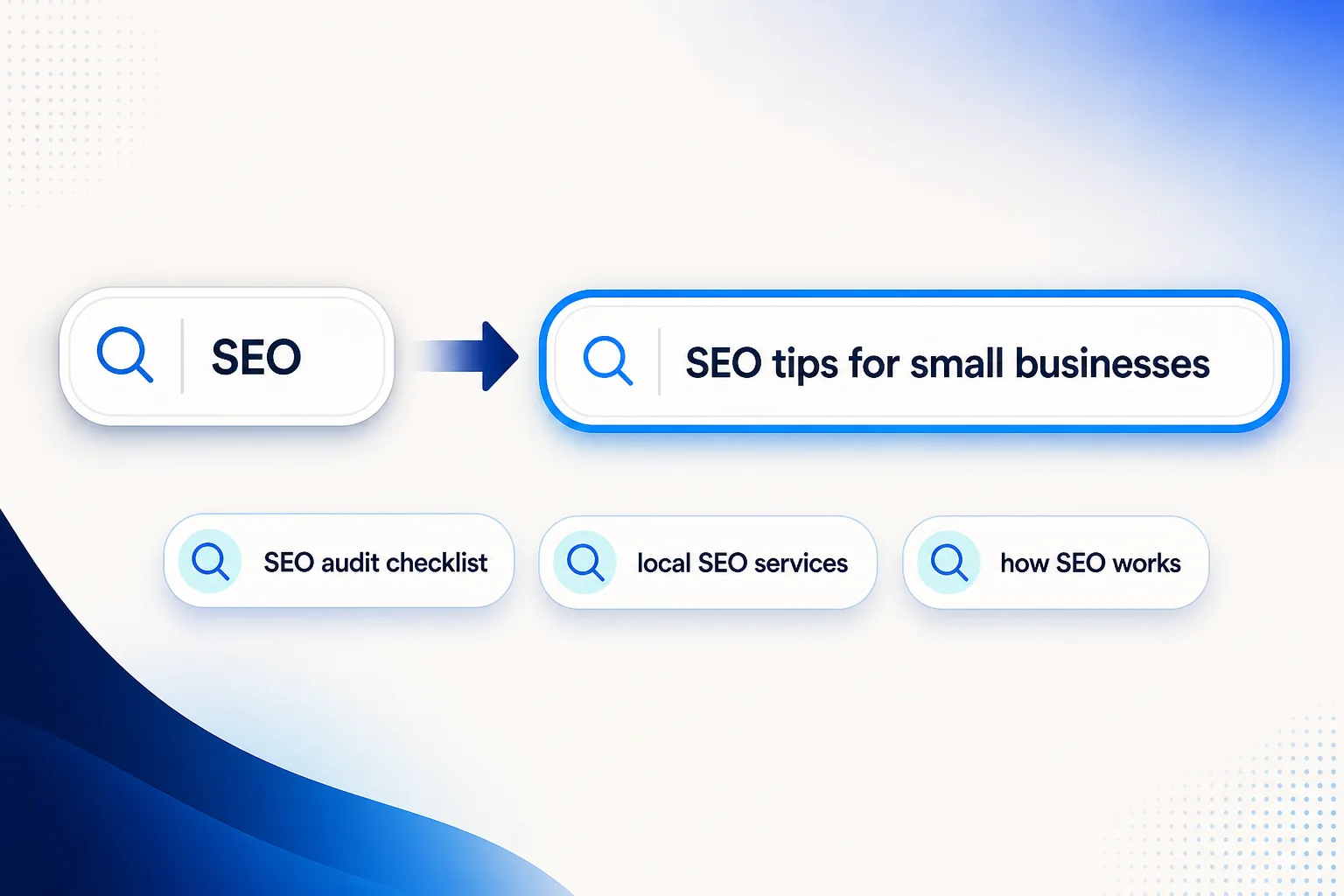
Yes. SEO keywords can be phrases.
An SEO keyword can be one word, several words, a question, or even a complete sentence. What matters is not the number of words. What matters is the need behind the search and whether your page gives the searcher a useful answer.
For example, accounting, accounting software, and best accounting software for freelancers can all be treated as keywords during research. They are very different targets, however. The first is broad, the second names a product category, and the third expresses a much more specific commercial need.
The practical answer
A keyword phrase is useful when it represents a real search need. Choose phrases according to relevance, intent, and page purpose. Do not create a separate page for every wording variation, and do not repeat an exact phrase simply to reach a target count.
What Does Keyword Mean in SEO?
In everyday SEO work, the word keyword is a convenient planning term. It describes a word or group of words that a page may target in search.
Google Search Console uses the term query for the search terms that caused a page to appear in Google. That distinction is useful:
- Target keyword: the term a marketer chooses during research.
- Keyword phrase: a target made from more than one word.
- Search query: the words a real person entered into a search engine.
- Search intent: the outcome that person wanted.
- Topic: the broader subject a page explains or serves.
These ideas overlap, but they are not identical. You may plan a page around one main keyword phrase and later discover that people find it through dozens of different queries.
| Term | Plain meaning | Example |
|---|---|---|
| Keyword | A research target or topic label | SEO |
| Keyword phrase | A target containing several words | SEO for small businesses |
| Search query | The words a person actually searched | Do I need SEO for my business? |
| Search intent | The result the person wanted | Deciding whether to invest in SEO |
Can a Keyword Be More Than One Word?
Yes. Many useful SEO targets contain multiple words because people often add detail when they search.
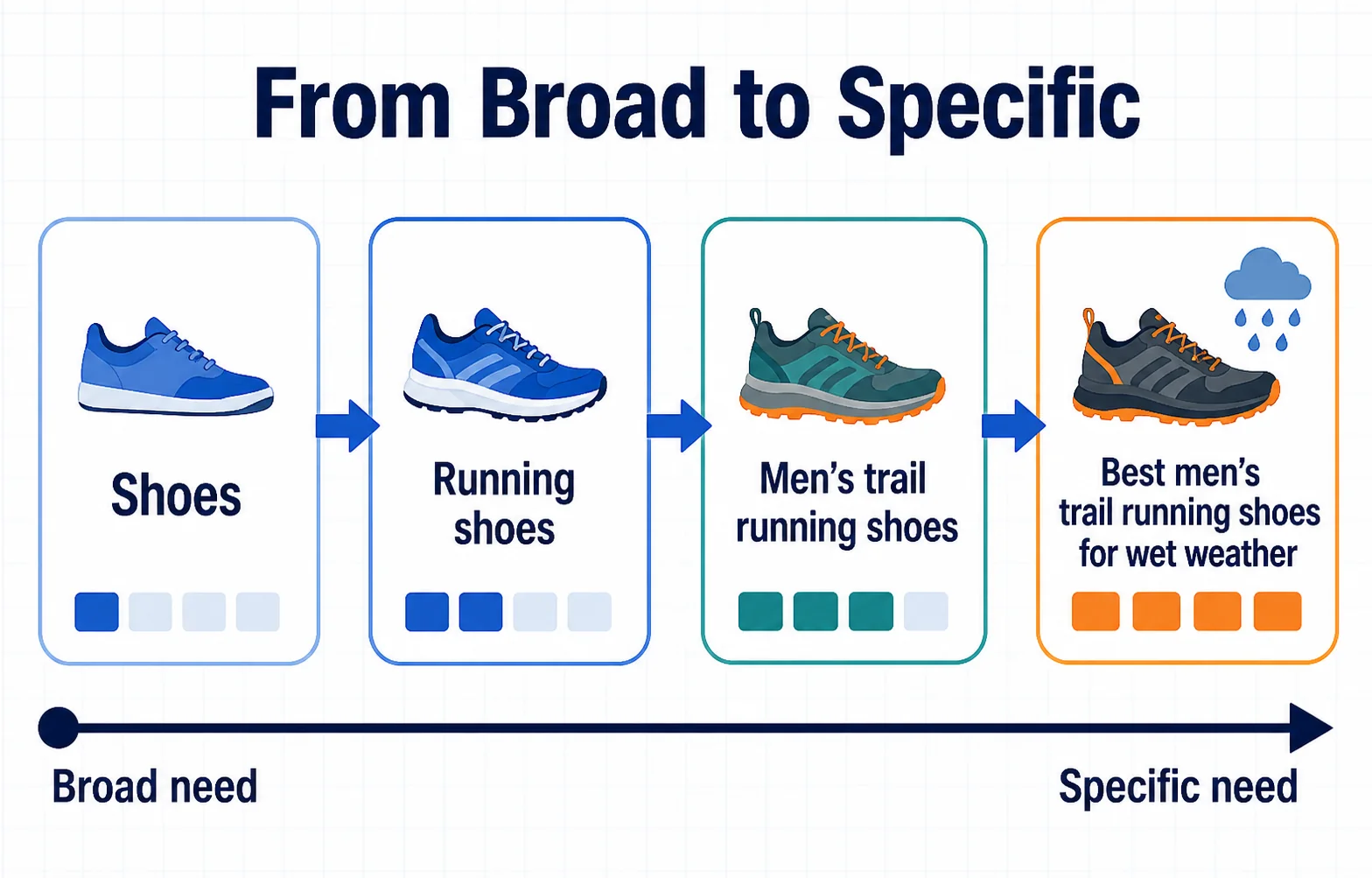
Compare these examples:
- Shoes: the person could want definitions, pictures, shops, repairs, brands, or fashion advice.
- Running shoes: the product category is clearer.
- Men's trail running shoes: the audience, activity, and product type are clearer.
- Best men's trail running shoes for wet weather: the person appears to be comparing products for a specific condition.
Longer wording often provides more context, but length alone does not make a phrase valuable. A detailed phrase can still be irrelevant to your business, and a short phrase can still express a clear commercial need.
Is Every Keyword Phrase a Long-Tail Keyword?
No. The terms are related, but they should not be treated as synonyms.
A keyword phrase simply contains multiple words. A long-tail keyword usually refers to a more specific search with lower individual demand than a broad, popular head term. Many long-tail searches are long phrases, but word count is not the only consideration.
For example, weather today is a two-word phrase with very broad demand. A short product code could contain only one word while representing a narrow search. The better question is not, “How many words does it contain?” The better question is, “How specific is the need, and what page would satisfy it?”
Common Types of Keyword Phrases
Keyword phrases can be grouped by what the searcher is trying to accomplish.
Informational phrases
The person wants to learn, understand, or solve a problem.
- how keyword research works
- why website traffic dropped
- can SEO keywords be phrases
Commercial phrases
The person is comparing approaches, providers, or products before making a decision.
- best SEO company for ecommerce
- technical SEO audit services
- Shopify versus WooCommerce SEO
Transactional phrases
The person appears ready to take a specific action.
- book an SEO consultation
- buy trail running shoes
- download keyword checklist
Local phrases
The person needs a result connected with a location.
- emergency plumber near me
- SEO company in Lahore
- web developer in Manchester
Branded phrases
The query includes a company, product, or platform name. The person may want a login page, price, review, comparison, or support answer.
Use the Phrase-to-Page Test
A common SEO mistake is creating a new page for every phrase in a spreadsheet. That can produce several weak pages competing to answer the same need.
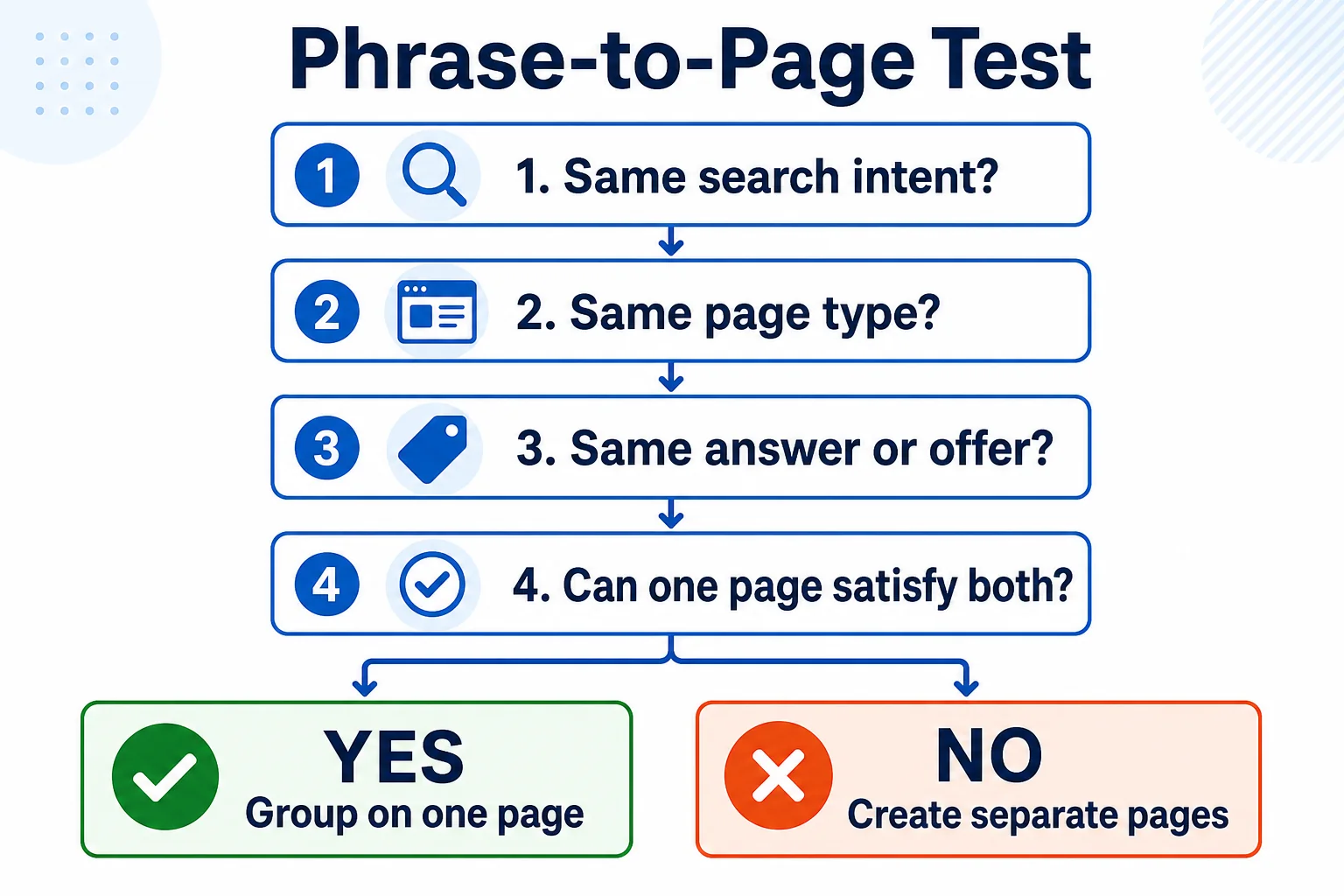
Before placing related phrases on one page or separating them, ask four questions:
- Do the phrases express the same intent? Someone seeking a definition may need a different page from someone ready to buy.
- Would searchers expect the same page type? A guide, product page, service page, category page, and tool solve different jobs.
- Do the phrases concern the same offer or answer? Closely related wording is not enough if the required solution changes.
- Could one complete page satisfy all the searches? If yes, combining the phrases may create a clearer and more useful resource.
Example: phrases that may belong together
Emergency plumber, 24 hour plumber, and urgent plumbing repair may lead to the same service page when the business offers one emergency service.
Example: a phrase that needs another page
How to become a plumber has a career and training intent. It should not be forced onto an emergency plumbing service page.
Can One Page Rank for Several Phrases?
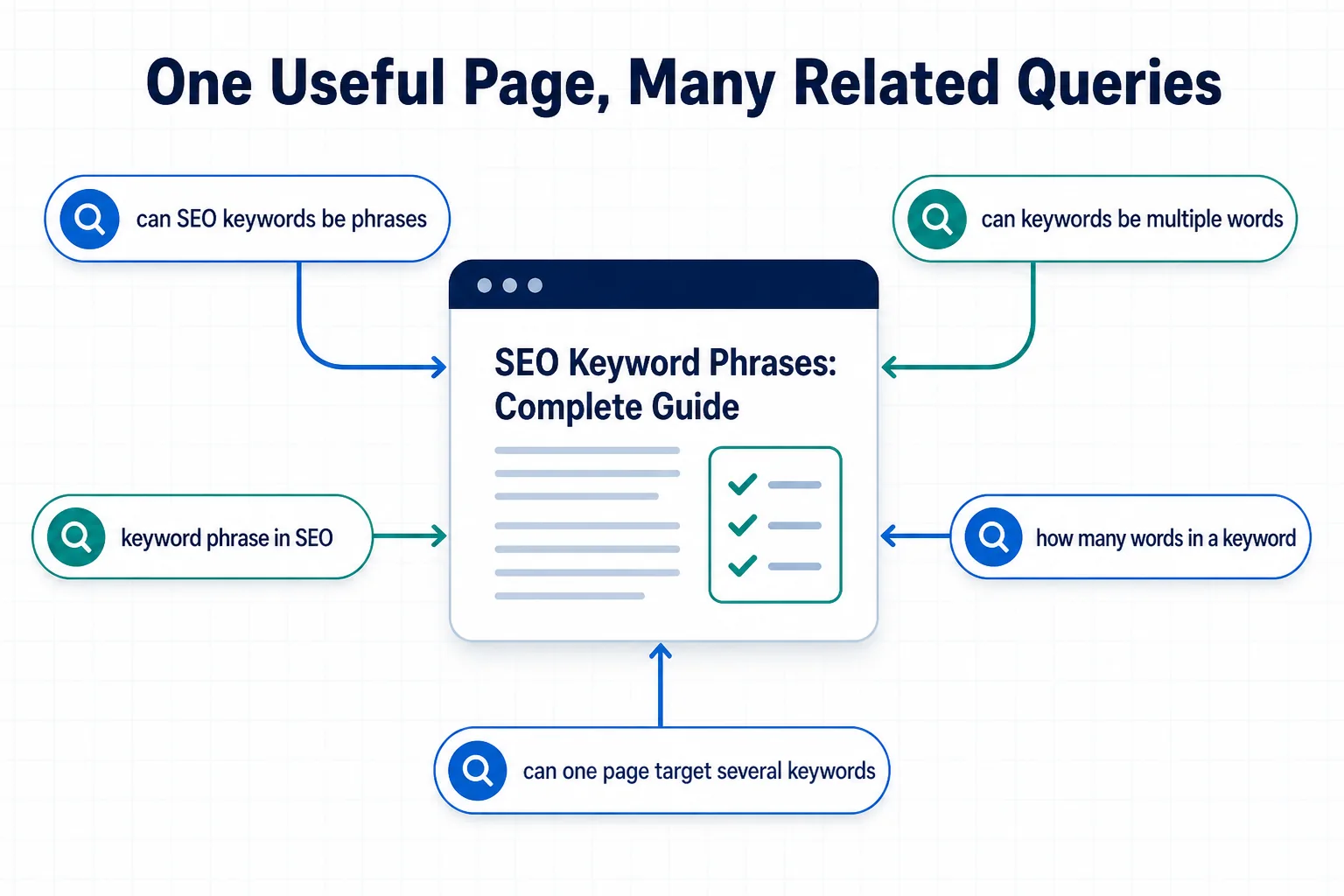
Yes. A focused page can appear for many related queries when those searches share a topic and intent.
Google advises publishers to think about the different terms knowledgeable and new users may search. It also says its language matching systems can understand how a page relates to many queries, even when every variation is not written on the page. See the Google SEO guide.
This means you do not need to repeat every singular, plural, reordered, or question-based version of a phrase. Write a complete page in natural language. Use the terminology readers need, but let the subject determine the wording.
Should You Use the Exact Keyword Phrase?
Use an exact phrase when it fits naturally and makes the page clearer. Do not force it into sentences where a normal variation would read better.
A primary phrase may appear in the title, main heading, introduction, or another prominent location. That does not mean it must appear in all of them, and it does not mean it should be repeated a fixed number of times.
Google defines keyword stuffing as filling a page with repeated keywords or numbers in an attempt to manipulate rankings. Repeating the same words so often that the writing sounds unnatural is one example in Google's spam policies.
Where Should Keyword Phrases Appear?
There is no mandatory placement formula. Useful locations may include:
- the page title;
- the main heading;
- the introduction;
- descriptive subheadings where relevant;
- the page copy;
- a short and readable URL;
- internal link text when it accurately describes the destination;
- image alt text when the image genuinely represents the phrase.
A phrase should never be added to alt text, headings, or links merely to create another occurrence. Each element has a job for the reader and should remain useful in that context.
If you are deciding how keywords relate to titles and descriptions, read the guide to meta tags.
How Many Keyword Phrases Should a Page Target?
There is no universal number.
A practical page plan usually has one clear purpose, one primary topic, and several closely related phrases or questions. The number of useful phrases depends on the subject, the offer, and how people search.
Do not turn “one primary keyword” into a rule that prevents natural coverage. It is a planning device, not a technical limit. The page should remain focused enough that a reader can understand what it is for.
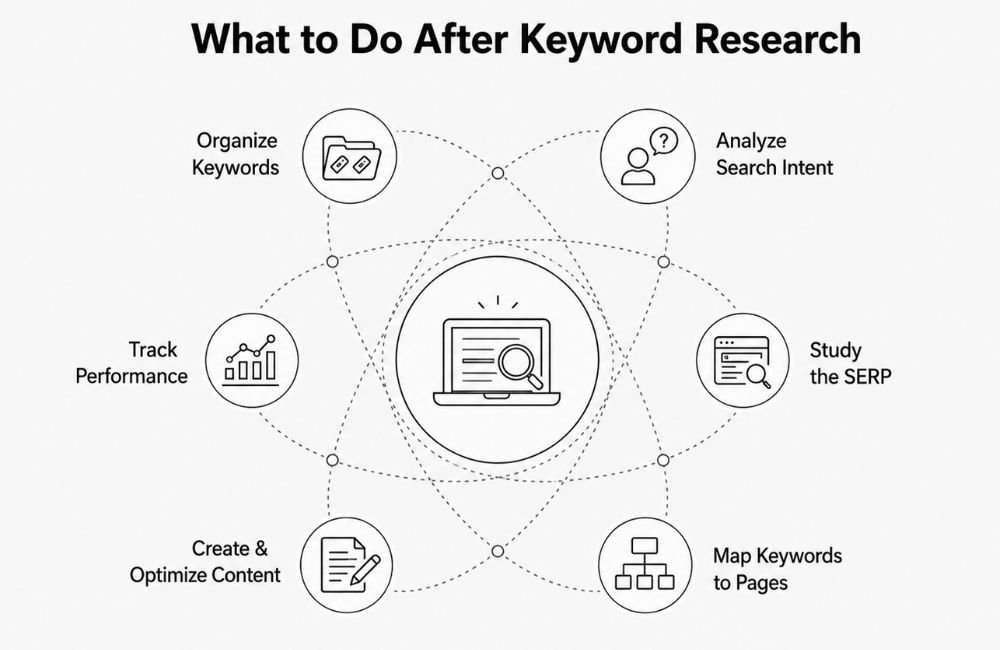
After research, group terms by intent and map them to suitable pages. The full keyword workflow explains how to clean a list, study results, map topics, and prioritize work.
Practical Keyword Phrase Examples
| Primary phrase | Related searches | Likely page |
|---|---|---|
| local SEO services | local SEO company, local search help, Google Business Profile SEO | Service page |
| can SEO keywords be phrases | can keywords be multiple words, keyword phrase in SEO | Educational article |
| men's trail running shoes | trail shoes for men, men's off-road running shoes | Product category |
| SEO audit checklist | website SEO checklist, how to audit a website | Guide or downloadable resource |
Common Keyword Phrase Mistakes
Creating a page for every variation
Pages for singular, plural, reordered, and question versions can compete with one another when they solve the same problem. Start with intent and page purpose before creating another URL.
Choosing volume without relevance
A popular phrase is not valuable when the searcher is unlikely to need your information, product, or service. Relevance and business fit should be considered alongside demand.
Mixing different intentions
A page becomes confusing when it tries to be a definition, buying guide, product category, and service page at the same time. Decide what the reader needs to accomplish.
Following a plugin mechanically
An SEO plugin can highlight missing elements, but its phrase count or color score is not a Google ranking rule. Use it as a prompt for review, not as a substitute for judgment.
Counting exact repetitions
Readers notice awkward repetition quickly. Explain the subject completely, edit for clarity, and remove wording that exists only to repeat a target phrase.
Measure the Queries That Actually Appear
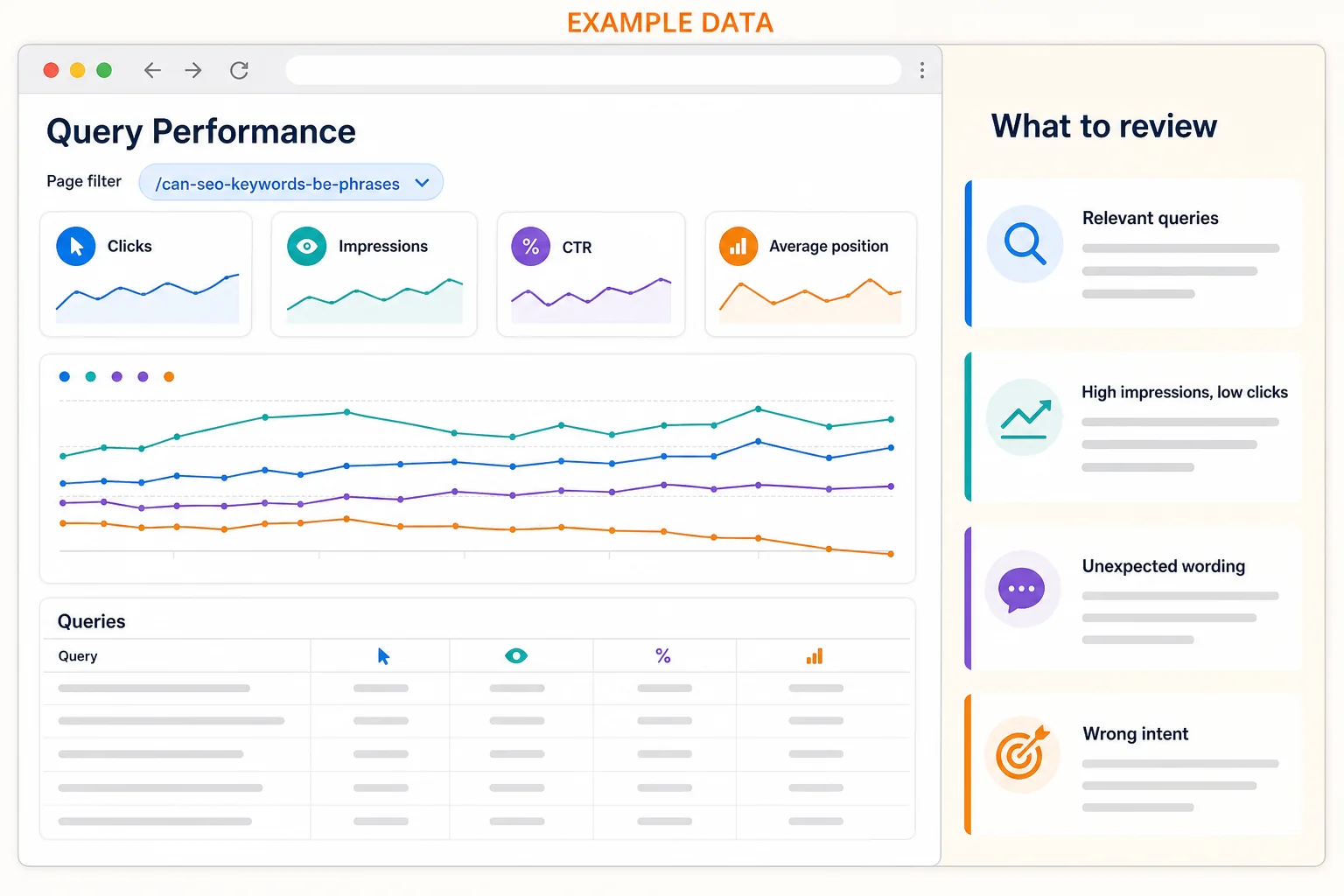
Your research list is a forecast. Search Console shows which queries actually produced impressions and clicks after publication.
Open the page in the Performance report and review its Queries tab. Look for:
- phrases already producing clicks;
- relevant queries with impressions but few clicks;
- unexpected wording that reveals another reader need;
- queries that show the page is attracting the wrong intent.
Google notes that query rows are exact matches without case sensitivity, while similar searches can be grouped with regular expressions. Its Search Console guide explains the query and page workflow.
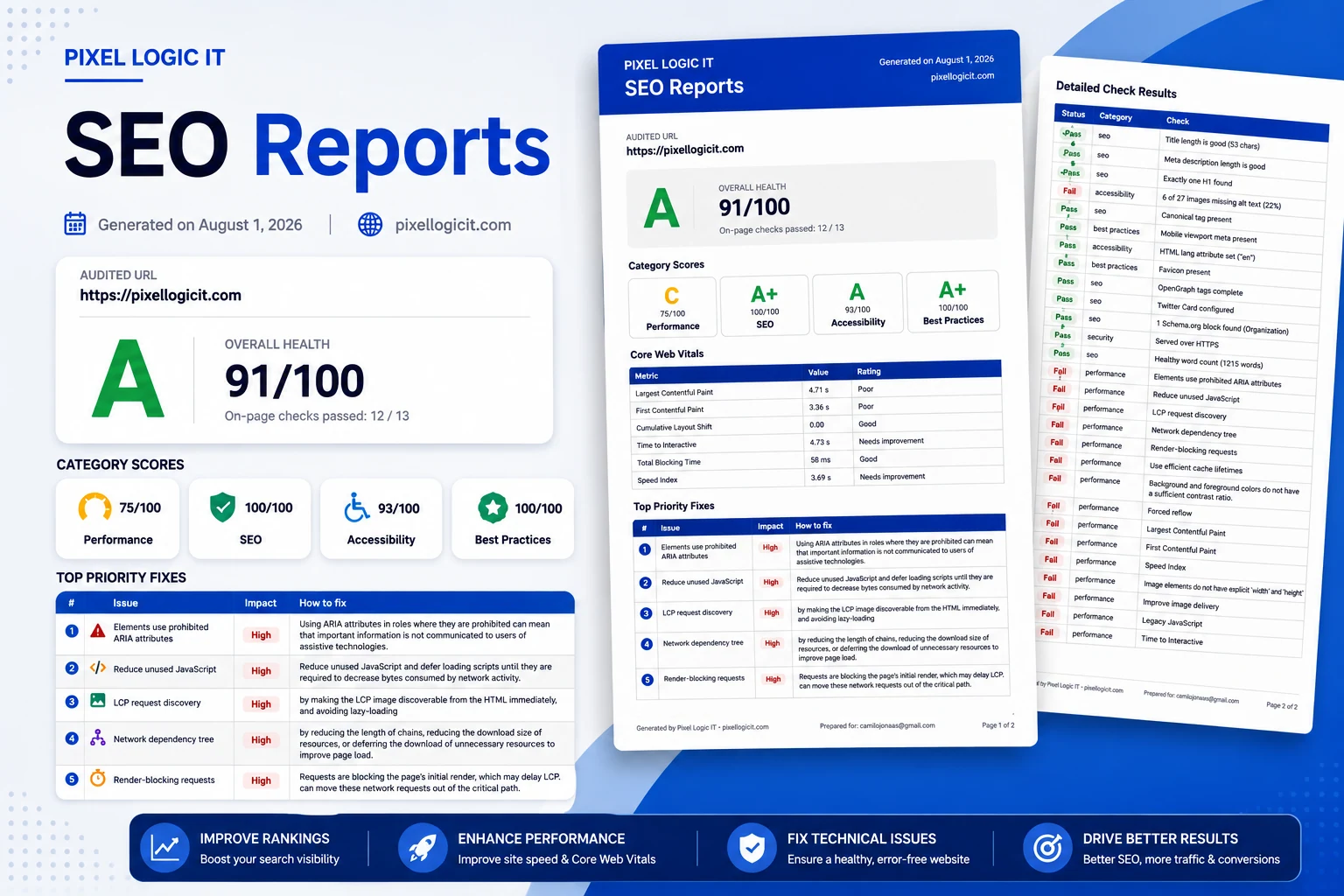
Do not rewrite the page after one impression or a few days of data. Watch meaningful patterns, compare suitable periods, and connect visibility with useful actions. The guide to reading an SEO report explains that measurement sequence.
Frequently Asked Questions
Can an SEO keyword contain multiple words?
Yes. A keyword used in SEO planning can contain one word, several words, or a complete question. The phrase should represent a relevant search need.
Can a complete sentence be a keyword?
Yes. People often search with complete questions, especially when they want instructions or explanations. Write a natural answer instead of repeating the full sentence many times.
Are all keyword phrases long-tail terms?
No. Every multi-word target is a phrase, but long-tail usually describes a more specific search with lower individual demand. Word count alone does not determine whether a term belongs to the long tail.
Do I need the exact keyword in every heading?
No. Use the phrase where it helps readers understand the page. Headings should describe their sections clearly, not repeat one target mechanically.
Can one page target several keyword phrases?
Yes, when the phrases share intent, expected page type, and subject. If the searcher needs a different answer or action, another page may be more appropriate.
Do singular and plural keywords need separate pages?
Usually not when both versions express the same intent. Check the search results and expected page type before separating them.
Final Answer
SEO keywords can be phrases. They can also be questions and complete sentences.
The useful unit is not a fixed string that must be repeated. It is a search need that your page should satisfy. Choose a clear topic, group related phrases by intent, create the right type of page, and write in language that helps the reader complete their goal.
You can use the Keyword Shuffler to explore phrase combinations, but validate every combination for relevance and intent. For a structured plan that connects search demand with suitable pages, review the keyword research service.