

If you are asking, “Do I need an SEO company?” you are probably not wondering whether Google matters. You are trying to decide whether professional help would create enough value to justify the cost.
For some businesses, the answer is yes. For others, doing the basics themselves, hiring a specialist for one project, working with a consultant, or simply waiting is the more sensible choice.
The short answer is this: an SEO company may make sense when relevant customers search for what you sell, additional customers could justify the investment, your website can convert those visitors, and nobody inside the business has the time or skills to execute the work properly.
If one of those foundations is missing, solve that problem first. Hiring an agency is not a cure for an unclear offer, weak margins, a confusing website, or a lack of genuine search demand.
Google's own guidance about hiring an SEO takes a similarly balanced position. It says professional help can improve visibility and save time, but an irresponsible provider can also damage a website and its reputation. Google also says a small local business may be able to handle much of the foundational work itself.
A transparent note
Pixel Logic IT provides SEO services, so we have a commercial interest in this subject. An agency is not the right choice for every business, however. This guide deliberately includes situations where DIY SEO, a consultant, a one-time specialist, an internal hire, or waiting would make more sense.
Take the SEARCH Fit Test
The SEARCH Fit Test below is a practical decision aid created for this article. It is not an official Google assessment and it does not predict rankings or revenue. It helps you work through six questions in the right order, then points you toward a sensible operating model.
One weak foundation can matter more than five positive answers. For example, having a large budget and no internal team does not make an agency worthwhile if the right customers do not search for what you sell.
No email required
Check your SEO-company fit
Answer all six questions. This is a practical decision aid created for this article, not an official Google test or a promise of results.
Answered 0 of 6
Planning estimate
SEO break-even calculator
Estimate how many additional qualified leads would need to become customers for the selected investment to cover its simple gross-profit cost.
This is a simplified planning estimate, not a ranking, traffic, lead, or revenue forecast. Results may arrive outside the selected period, attribution may be shared with other channels, and customer lifetime value or additional internal costs can change the calculation.
What Can an SEO Company Actually Do?
A good SEO company helps a business earn more useful visibility in unpaid search results. That can involve understanding what potential customers search for, helping search engines access and understand the website, improving important pages, planning content, and measuring whether the work contributes to enquiries or sales.
Google lists services such as reviewing site structure and content, providing technical advice, developing content, performing keyword research, offering training, and bringing expertise in particular markets or locations.
In practical terms, an SEO company might:
- identify technical obstacles that prevent important pages from being crawled or indexed;
- research how customers describe their needs;
- improve service, product, category, and informational pages;
- plan new content around real customer questions;
- strengthen internal linking and site structure;
- support local, ecommerce, international, or other specialised search needs;
- measure visibility, qualified visits, enquiries, and sales;
- coordinate the writers, developers, designers, and subject experts needed to implement the plan.
But an SEO company cannot capture direct searches that are not happening. Helpful content can introduce people to a problem and support awareness, but rankings alone do not make an uncompetitive offer appealing. A provider also cannot guarantee that every visitor will become a customer or honestly guarantee a number-one Google position.
A provider will usually need accurate information, suitable access, and timely decisions from the business. Someone may still need to explain the products, approve accurate content, answer customer questions, and remove roadblocks. Outsourcing SEO does not mean outsourcing responsibility for the truth of what appears on your website.
The Six Parts of the SEARCH Fit Framework
The framework starts with the business opportunity, not with an agency proposal. Work through the six parts in order.

S — Search demand: Do the right people search for what you sell?
Search volume and useful demand are not the same thing. A phrase can receive thousands of searches while attracting people who will never buy. A smaller number of highly relevant local or specialist searches may be much more valuable.
Look for evidence in several places:
- questions customers ask before buying;
- the words people use during sales calls;
- queries already appearing in Google Search Console;
- competitors showing up for valuable services or products;
- live search results for the problems your business solves;
- keyword research that separates informational interest from buying intent.
Keyword tools are useful, but they are estimates. They can miss new, local, low-volume, and highly specific searches. If the opportunity remains uncertain, buy a limited research or strategy project before agreeing to a long engagement.
E — Economics: Could the investment reasonably pay for itself?
Do not begin with the question, “How much does an SEO company cost?” Begin with, “What would need to happen for this investment to make business sense?”
A simple planning formula is below. Treat the total investment as more than the provider's fee: include expected content, development, tools, and relevant internal implementation costs.
Required qualified leads = total SEO investment ÷ (gross profit per customer × lead-to-customer closing rate)
Use gross profit, not total sales revenue. If a sale brings in $1,000 but costs $700 to deliver, its simple gross profit is $300, not $1,000.
Consider a hypothetical plumbing business evaluating a total six-month SEO investment of $12,000. If a new customer produces $600 in gross profit and one in four qualified leads becomes a customer, each qualified lead is worth about $150 in expected gross profit. The investment would therefore need roughly 80 additional qualified leads to reach simple gross-profit break-even.
That is not a promise or forecast. Results may arrive outside the chosen period, a customer may discover the business through more than one channel, and lifetime value can change the calculation. The point is to replace vague hope with a business requirement you can evaluate.
A — Ability to convert: Is your website ready for the right visitor?
Imagine that the perfect customer lands on your website today. Can they quickly understand what you offer, who it is for, why they should trust you, and what to do next?
Check whether:
- the offer is clear without making visitors decode marketing language;
- services, products, locations, and next steps are easy to find;
- the website works properly on a phone;
- reviews, examples, policies, or other trust signals are available where needed;
- contacting, booking, requesting a quote, or purchasing is straightforward;
- calls, forms, purchases, or other meaningful actions are measured.
More traffic sent to a confusing website usually creates more confusion, not more customers. Sometimes an SEO engagement can include landing-page and conversion improvements. In other cases, preparing the website should come first.
R — Resources: What capability is actually missing?
“We need SEO” is not yet a useful diagnosis. Do you lack strategy, implementation time, technical skill, writing capacity, or all of them?
The missing capability often points toward the right form of help:
- A simple site and an owner with time: DIY fundamentals may be enough.
- A specific indexing, migration, or technical problem: hire a specialist for that project.
- Writers and developers without a clear search strategy: consider a consultant or hybrid arrangement.
- No strategy and no execution capacity: an SEO company may make sense.
- SEO is central to daily product and marketing decisions: an in-house person or hybrid team may fit better.
Even with an agency, someone inside the business must own approvals and remove roadblocks. A strong strategy can sit unused for months when nobody is available to implement it.
C — Complexity: How difficult is the opportunity?
A ten-page local service website is not the same SEO problem as an ecommerce store with thousands of products. Improving an established website is not the same as protecting visibility during a redesign or domain migration.
Complexity can come from:
- strong and well-established competitors;
- a large or frequently changing website;
- multiple countries, languages, locations, or product categories;
- JavaScript rendering, crawling, duplication, or indexing problems;
- an upcoming redesign, replatforming, or migration;
- industries where accuracy, safety, regulation, or trust is especially important.
A larger agency is not automatically the answer to complexity. A focused technical specialist may be more useful for a migration, while an experienced internal team may need only periodic strategic review.
H — Horizon: Can you invest without needing an immediate return?
SEO work involves discovery, implementation, search-engine processing, measurement, and continued improvement. The timing varies with the website, competition, scope, and how quickly recommendations are implemented. There is no honest universal countdown.
If the business needs sales this week to meet payroll, SEO should not be its only acquisition channel. Paid search, partnerships, referrals, events, marketplaces, or direct outreach may provide faster feedback while the business builds a useful search foundation.
A longer horizon does not mean accepting endless activity without evidence. It means agreeing on what will be completed, which early indicators matter, when assumptions will be reviewed, and what would cause the plan to change.
Which SEO Operating Model Fits Your Situation?
An agency is not the highest level in this table. It is simply one way to organise the work.
| Likely outcome | When it may fit |
|---|---|
| Wait and prepare | The offer, economics, website, tracking, or evidence of demand is not ready. |
| DIY fundamentals | The site is simple, competition is manageable, and someone has time to learn and implement the work. |
| One-time specialist | There is a defined audit, migration, indexing, analytics, local, or technical problem. |
| SEO consultant | The business can implement the work but needs experienced diagnosis, prioritisation, or oversight. |
| SEO company | Ongoing strategy and execution are both missing, and the search opportunity supports continued investment. |
| In-house or hybrid | SEO is strategically important and requires frequent coordination with product, sales, content, or development teams. |
When You Probably Do Not Need an SEO Company Yet
Not hiring an agency is sometimes the most responsible decision.
Your offer is still changing every week
If you are still discovering who the customer is, what they value, and what they will pay for, faster feedback channels may be more useful. Search data can contribute evidence, but it should not be the only method used to validate an offer.
You cannot implement the recommendations
An audit does not fix a website. If no one can update pages, review content, approve changes, or work with the provider, the engagement may produce documents rather than improvements.
You need immediate sales
SEO can be part of a durable acquisition strategy, but it should not be presented as an emergency source of revenue. Use it alongside channels that can create faster feedback when timing is critical.
You already have the necessary capability
A capable internal marketer, writer, and developer may be able to handle a straightforward programme. External help can still be useful for a review or difficult project, but a full-service retainer is not automatically necessary.
You are buying SEO because everyone says you should
“Our competitors do SEO” is a reason to investigate, not a complete business case. Understand the opportunity, requirements, cost, and measurement plan before signing.
When an SEO Company May Be a Sensible Choice
An agency becomes easier to justify when several conditions are true at the same time:
- customers use search while researching or choosing what you sell;
- competitors consistently capture commercially useful searches;
- the potential customer value can support the investment;
- the website has technical, content, local, ecommerce, or authority gaps;
- nobody internally can build and execute a complete plan;
- the business can supply subject knowledge and approve implementation;
- the business can evaluate progress without depending on a guaranteed short-term result.
A redesign or new website is another important moment. Google recommends involving an SEO early so search considerations can be included in the structure rather than repaired after launch.
What Should the First 90 Days Look Like?
The first months should be judged by the quality and implementation of the work—not by a promised ranking date. The exact scope will vary, but a sensible early engagement commonly covers the following areas.
1. Agree on the business outcome
The provider should understand what a qualified enquiry, valuable transaction, booking, signup, or other meaningful result looks like. “More traffic” is too vague to guide good decisions.
2. Establish a trustworthy baseline
Review current visibility, indexing, important pages, analytics, conversions, and known technical problems. Record the baseline so later changes can be evaluated honestly.
3. Identify commercially useful opportunities
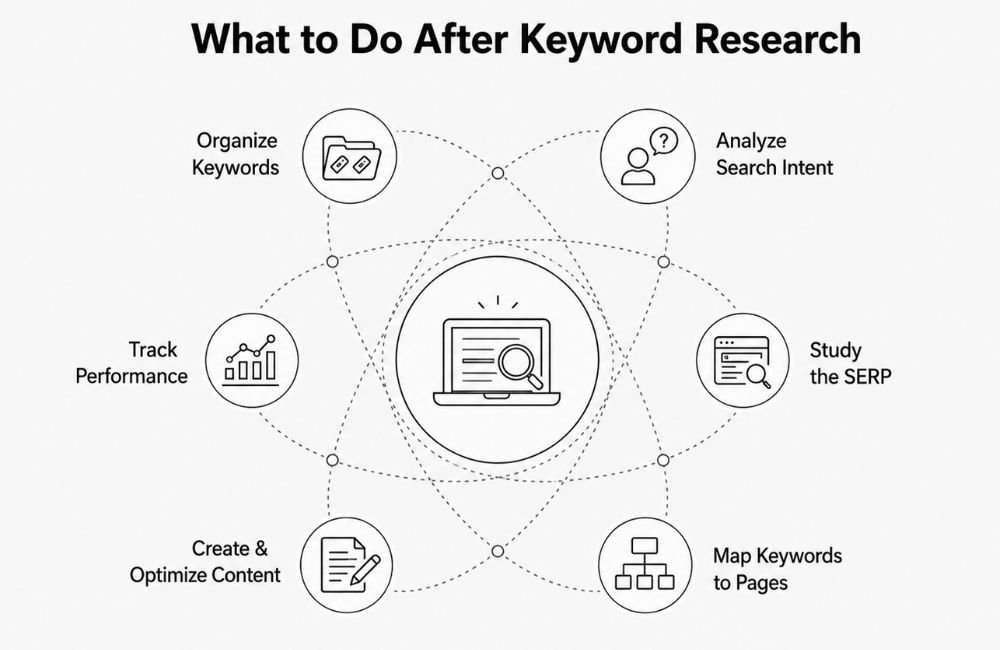
Separate searches that may produce business from topics that produce attention without intent. Map the most useful themes to existing or required pages. If you already have keyword research, the next step is to turn it into a practical page and content workflow.
4. Prioritise by impact, effort, and dependency
A long audit can contain hundreds of observations. The useful part is knowing which few actions should happen first, who will complete them, what they depend on, and how success will be assessed.
5. Implement a manageable first group of improvements
That may mean repairing indexing problems, improving important service or product pages, fixing internal links, clarifying local information, or publishing a small number of well-researched pages. Activity is not progress until something useful changes on the website.
6. Document what changed and what happens next
You should know which changes were made, why they were made, what early signals are being watched, and what the next decision will be. A provider should be able to explain this without hiding behind tool scores.
How Should SEO Success Be Measured?
Rankings can help diagnose visibility, but they are not the final business result. A useful measurement chain looks like this:
Relevant impressions → qualified clicks → useful website actions → leads or sales → gross profit
Google explains that Search Console and Google Analytics answer different parts of this journey. Search Console shows what happened in Google Search before a person arrived, including queries, impressions, and clicks. Analytics helps show what visitors did after arriving, such as visiting key pages, submitting a form, or making a purchase.
The numbers in the two tools should not be expected to match exactly because they use different systems and definitions. What matters is building a consistent view from search visibility to business action.
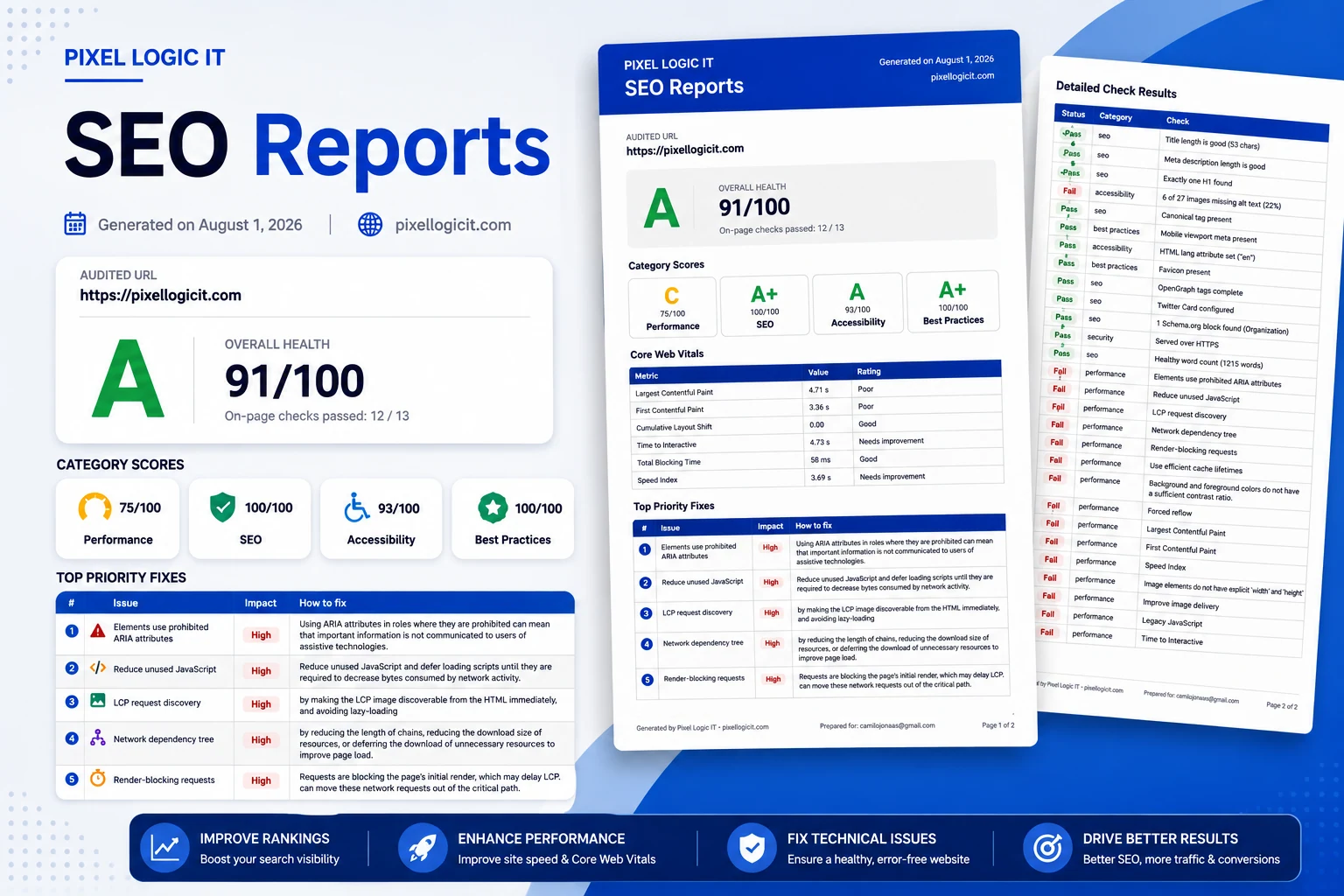
Before hiring, agree on which metrics will appear in reports and who is responsible for conversion tracking. Our guide to reading an SEO report explains how to separate meaningful progress from impressive-looking numbers.
Questions to Ask Before Hiring an SEO Company
A useful conversation should feel like a diagnosis, not a scripted sales pitch. Ask:
- What problem do you believe we should solve first, and why?
- Which work will you perform, and which work remains our responsibility?
- How will you connect SEO activity with qualified enquiries, sales, or another business outcome?
- What evidence supports your recommendations?
- Who will actually work on our account?
- How will changes be documented and communicated?
- What experience do you have with our market, location, website type, or problem?
- What do you expect to happen, over what timeframe, and which assumptions could change that expectation?
- Who will own our website, Analytics, Search Console, content, and other accounts?
- Can you provide relevant references or examples without exposing another client's private information?
- What happens if the early evidence shows that the original plan is wrong?
Google advises checking references, asking for examples, understanding how results will be measured, and making sure the provider is interested in your business. During an initial audit, Google recommends granting read-only Search Console access rather than permission to make changes.
SEO Company Red Flags
Be cautious when a provider:
- guarantees a number-one ranking;
- claims a special relationship with Google or priority submission access;
- calls its third-party tools “Google approved”;
- refuses to explain its methods or planned changes;
- sells large numbers of links without explaining their origin or risk;
- reports only keyword counts, traffic, or proprietary authority scores;
- recommends major changes before learning about the business and customers;
- requests ownership of accounts that should remain under your control;
- cannot explain who is responsible for implementation;
- uses fear or a fixed deadline to force a contract.
Google specifically warns that nobody can guarantee a first-place position. It also warns against secretive providers and link schemes intended to manipulate rankings. You remain responsible for work carried out on your website, even when another company performs it.

Four Examples of Different Businesses Making Different Decisions
These examples are hypothetical. They show why the same answer does not fit every business.
A new local bakery: wait and prepare
The bakery is still changing its product range and has not decided whether online orders, catering, or walk-in customers are the priority. The website does not track orders or calls. A large monthly SEO engagement would be premature. The sensible next step is to clarify the offer, set up measurement, complete local fundamentals, and learn which searches connect with profitable orders.
An established plumbing company: consider an agency
The business knows which jobs are profitable, receives regular referrals, and sees competitors appearing for emergency and service searches. The website is weak, local visibility is limited, and nobody internally has time to manage content, technical fixes, or reporting. If the break-even requirement is realistic, an SEO company may provide the missing strategy and execution.
A B2B software company: consider a consultant or hybrid
The company already has writers, developers, subject experts, and analytics support. What it lacks is a coherent search strategy and senior review. It may get more value from a consultant who guides the internal team than from outsourcing every task.
A business preparing for a website migration: hire a specialist early
The main risk is not an ongoing shortage of marketing capacity. It is protecting important URLs, redirects, content, internal links, and measurement during a major change. A migration specialist involved before development is complete may be more appropriate than a broad agency package.
Frequently Asked Questions
Can I do SEO myself?
Yes. Google says many small local businesses can handle much of the foundational work themselves. DIY is most realistic when the website is simple, competition is manageable, and you have time to learn, implement, and measure the work. Start with Google's SEO Starter Guide.
Is an SEO company worth it for a small business?
It can be, but business size is not the deciding factor. Search demand, customer value, website readiness, competition, internal capacity, and the quality of the provider matter more. A small business with valuable local searches may have a stronger case than a larger business whose customers rarely use search.
Should I hire an agency or an SEO freelancer?
Choose based on the work, not the label. A freelancer or consultant may provide direct senior attention and suit a focused project. An agency may offer more execution capacity across technical, content, and project-management needs. Verify who will perform the work, what is included, and how accountability will operate.
How much should I spend on SEO?
There is no universal amount. Scope, location, competition, website size, content requirements, and responsibility for implementation all affect cost. Work backwards from conservative gross profit, closing rates, total investment, and the size of the realistic search opportunity instead of copying another company's budget.
How long should I give an SEO company?
There is no standard period that fits every website. Ask what the provider expects to complete, which early indicators should change, when assumptions will be reviewed, and what would cause the plan to be adjusted. Do not accept either an instant ranking guarantee or endless activity without implemented work and evidence.
Does paying for Google Ads improve organic rankings?
No. Google states that advertising with Google does not affect a website's presence in organic search results. Paid and organic search can inform the same business strategy, but buying ads does not purchase an organic ranking advantage.
Final Answer: Do You Need an SEO Company?
You do not need an SEO company simply because SEO matters.
The right question is whether search represents a worthwhile opportunity for your business and whether outside support is the most sensible way to pursue it.
If relevant demand exists, the economics are realistic, the website can convert, and the missing capability includes ongoing strategy and execution, a capable SEO company may be a sound investment.
If those foundations are not ready, waiting or choosing a smaller form of help is not falling behind. It is good business judgment.
If you are still uncertain, begin with an assessment of your current visibility, website condition, measurement, and commercial opportunity. The purpose should be to identify the right next step—even when that step is not an ongoing agency engagement.
Start with evidence, not a sales package
You can run Pixel Logic IT's free SEO audit for an initial technical snapshot, or review our SEO services if the framework indicates that ongoing outside support may fit. An automated audit is a starting point, not a complete business strategy.
Last reviewed against current Google Search documentation on August 21, 2026.