
Affiliate content has a trust problem. Viewers know the creator may earn a commission, so they often examine the recommendation more carefully than an ordinary tutorial. That does not mean you need an expensive studio. It means the video must demonstrate real use, disclose the relationship, and help the viewer make a decision.
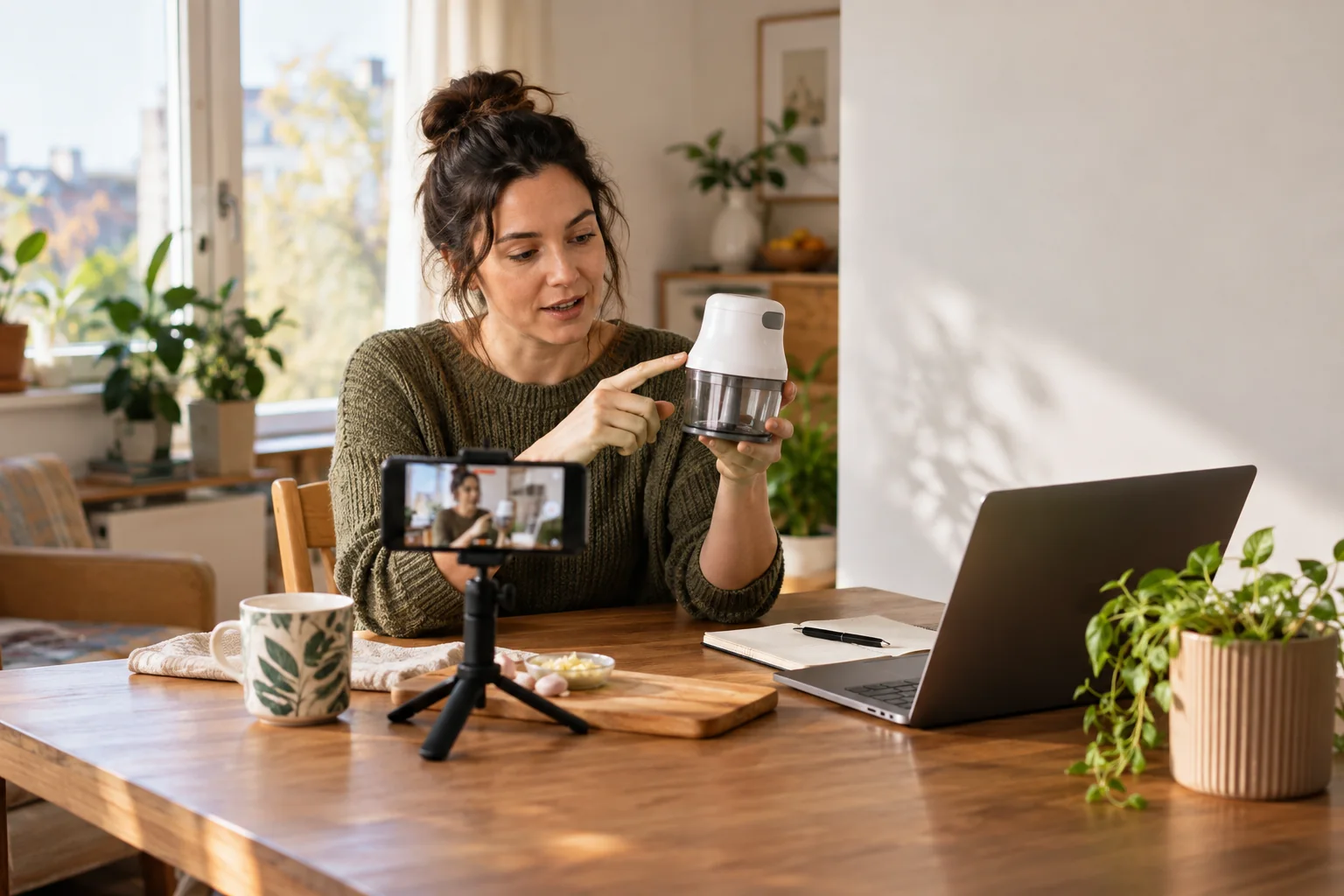
A phone-shot demonstration can work well when it feels direct and specific. It can also fail when the audio is poor, the product is barely visible, or the creator makes claims without evidence. No-studio production should feel accessible, not careless.
Start With Trust, Not Production Polish
A heavily produced video can sometimes feel like an advertisement. A simple demonstration may feel closer to the way a real customer would evaluate the product. That is a useful creative hypothesis, not a universal conversion rule.
The right level of polish depends on the audience and product. A casual phone video may suit a kitchen tool or mobile app. A higher-priced business product may need clearer graphics, stronger sound, and a more structured explanation. Test the presentation instead of assuming that casual always wins.
If you are still deciding whether the business model is realistic, start with the numbers behind affiliate marketing. A persuasive video cannot fix an offer with weak demand, low commission, high refund rates, or poor audience fit.
Disclose the Affiliate Relationship Clearly
A material connection should be easy to notice and understand. For a video endorsement, place the disclosure inside the video, not only in the description. Platform tools for paid promotions may also be required.
A plain statement is usually better than vague language. For example:
This video contains affiliate links. If you buy through one of them, I may earn a commission at no extra cost to you.
Show or say the disclosure near the recommendation, and repeat it when a long video makes the relationship easy to forget. Requirements vary by country and platform, so creators should check the rules that apply to their audience. Clear disclosure also helps separate responsible reviews from the marketing scams that make unrealistic promises or hide commercial relationships.
Use a Six-Part Affiliate Video Structure
- Disclose the relationship. Tell the viewer how you may benefit.
- Name the viewer's problem. Explain who the product is for and what it is meant to solve.
- Show the product in context. Demonstrate setup, use, or a realistic workflow.
- Provide specific proof. Show an observable result, detail, or limitation that comes from actual use.
- Explain the tradeoff. Say who may not need it or where it falls short.
- Give one clear action. Ask the viewer to check the link only after the useful evidence.
This structure gives the video a job at every stage. It also prevents the common mistake of spending the first minute pushing a link before the viewer has learned anything.
Show Proof Instead of Repeating Claims
“This product is great” tells the viewer very little. A better review shows what happens when the product is used. Demonstrate the setup time, one important feature, the result, and a situation where the product is less useful.
For physical products, show the size, controls, materials, assembly, noise, or cleanup. For software, record the screen and complete a real task. For services, explain the process and show a representative deliverable without exposing private customer data.
Specificity makes the video more useful and easier to trust. It also gives the viewer enough information to decide not to buy, which is part of an honest recommendation.
Minimum Equipment for a No-Studio Video
| Need | Practical option | Priority |
|---|---|---|
| Camera | A recent phone with a clean lens | Show the product clearly |
| Support | Small tripod or stable stand | Avoid distracting movement |
| Light | Window light or one soft lamp | Keep the demonstration visible |
| Audio | Quiet room or simple microphone | Make every explanation understandable |
| Software demo | Built-in screen recorder | Show the real workflow |
Spend on the bottleneck. If the phone picture is clear but the room echoes, improve the audio first. If the product is too dark to see, fix the light. Expensive equipment is not useful when the demonstration remains vague.
Place the Call to Action After the Proof
A practical starting point is to ask for the click after the viewer has seen the main demonstration and heard the most important limitation. Keep the action specific: check the current price, compare the available plan, or view the full specifications.
One clear CTA often creates a cleaner experience than several interruptions, but creators should test that choice. The correct placement can change with video length, platform, audience awareness, and offer. A sound marketing strategy adapts when performance data shows that viewers need the action earlier or later.
Measure More Than Link Clicks
A high click count is not enough if people immediately leave the merchant page or request refunds. Track:
- Viewer retention before and during the demonstration
- Clicks on the affiliate link
- Conversion rate after the click
- Revenue or commission per viewer
- Refunds, cancellations, or returned products
- Questions that reveal missing information
Use those signals to improve the next script. Good content writing can make the explanation tighter, but the recommendation still needs real product knowledge.
Where Invideo Agent Fits Into the Workflow
Once the real demonstration exists, invideo agent can help prepare supporting pieces such as an introduction, transitional B-roll, or alternate CTA versions. Keep the evidence at the center. A generated transition should not imply that the creator personally tested something that was never used.
The final edit should preserve the disclosure, product limitations, and sequence of proof. Understanding the editing basics makes it easier to review what an automated tool changed.
Common Mistakes to Avoid
- Hiding the affiliate relationship in small description text
- Reading product-page claims without showing real use
- Calling every product the best choice for everyone
- Ignoring poor audio because the picture looks good
- Adding a CTA before explaining the value
- Removing limitations that could change the buying decision
- Judging success only by clicks
Final Answer
You can make an effective affiliate video without a studio. Use a stable phone, clear light, understandable audio, and a real demonstration. Disclose the commercial relationship where viewers will notice it, explain a genuine tradeoff, and ask for the click after the viewer has enough evidence to decide.
Treat every conversion recommendation as something to test. Trustworthy content can support sales, but no camera style, script format, or CTA position guarantees a result across every product and audience.
Frequently Asked Questions
Can a phone video look professional enough? Yes. Stable framing, good light, clear audio, and a focused demonstration matter more than an expensive camera for many affiliate topics.
Where should the disclosure appear? Put it inside the video near the endorsement. Do not rely only on the description. Use any paid-promotion tool required by the platform.
Should the CTA always come at the end? Not necessarily. Place it after useful proof as a starting point, then test earlier or later positions based on viewer and conversion data.
Do casual videos always convert better? No. A casual approach may feel credible for some products and audiences, while others need more structured production. Test the presentation.
Can AI replace the product demonstration? AI can help structure and edit the video, but it should not fabricate personal experience or replace evidence of actual use.