

Your competitors leave clues everywhere. They change their pricing pages. They publish new content. They start ranking for new keywords. They launch products, change their messaging, run new ads, receive customer reviews, and enter markets you may not even be watching yet.
The difficult part is not finding competitive data. There is more of it than most teams can realistically process. The real challenge is finding the signals that matter. That is where competitive intelligence tools help. They collect, organize, and analyze information about competitors so you can spend less time searching and more time deciding what to do with what you learn.
However, competitive intelligence software is a broad category. A tool that helps a sales rep answer questions about a competitor is very different from one that tracks Google rankings or ecommerce prices.
What Are Competitive Intelligence Tools?
Competitive intelligence tools are software platforms that help businesses collect and analyze publicly available information about competitors, customers, industries, and market changes.
Depending on the platform, this might include:
- website changes
- product announcements
- competitor prices
- search rankings
- backlinks
- website traffic
- advertising activity
- customer reviews
- social conversations
- news coverage
- content performance
- sales feedback
The important word here is intelligence.
A pile of competitor data is not useful by itself. Good competitive intelligence helps you understand what changed, why it may matter, and whether your company should respond.
For example, discovering that a competitor changed one sentence on its homepage may not matter.
Seeing that it completely changed its positioning, launched an enterprise pricing tier, and started publishing content for a new customer segment could indicate a much larger strategic move.
Before Choosing a Tool, Decide What You Actually Need to Track
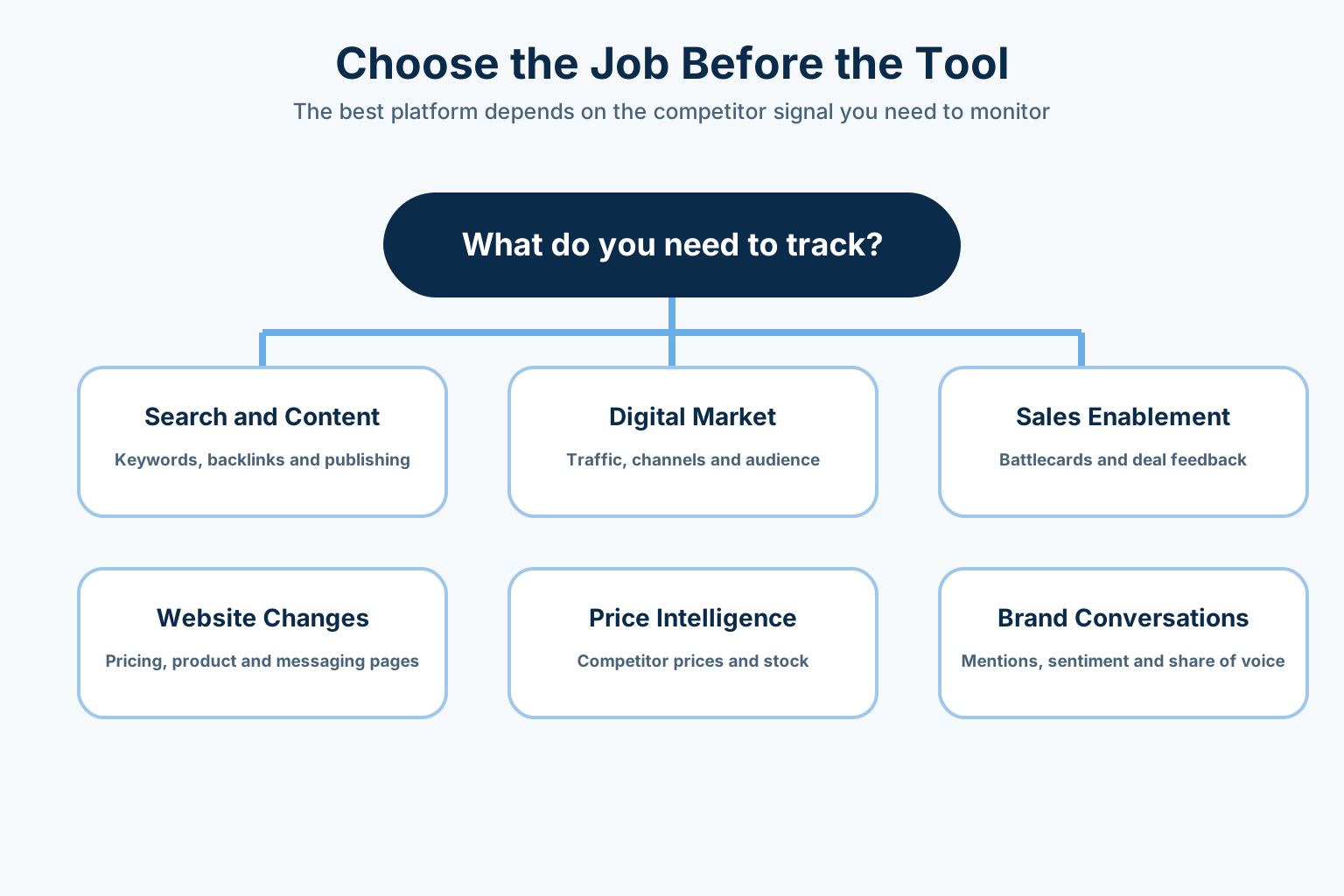
One of the easiest mistakes is choosing a popular competitive intelligence platform before defining the problem you want it to solve.
Start with the question you are trying to answer.
Content and SEO
You may want to know:
- Which competitor topics attract attention?
- What keywords are competitors ranking for?
- Which pages bring them search traffic?
- Where are they earning backlinks?
- What subjects have they recently started covering?
In that case, marketing tools such as Semrush and BuzzSumo may be more useful than a traditional sales intelligence platform.
Traffic and digital market share
If you want to compare websites and acquisition channels, you need digital market intelligence.
Typical questions include:
- Which competitor attracts the most online traffic?
- Where does its audience come from?
- Is search, advertising, referrals, or social driving growth?
- Which competitors are gaining digital market share?
Similarweb is particularly relevant to this kind of analysis.
Website and product changes
Sometimes you already know who your main competitors are.
You simply need to know when something changes.
That might include:
- pricing pages
- feature pages
- product documentation
- homepages
- terms
- promotions
- positioning
A website-monitoring tool can sometimes be more useful for this job than an expensive all-in-one platform.
Pricing
For ecommerce businesses, one competitive signal can outweigh many others:
What are competitors charging right now?
Retailers may also need to monitor stock availability and understand how their position compares with other sellers.
This requires specialized pricing intelligence.
Customer and social conversations
Another business may look strong from the outside while customers are complaining about it every day.
Social and brand intelligence tools can reveal:
- brand mentions
- customer sentiment
- trending discussions
- complaints
- campaign response
- share of voice
Sales intelligence
B2B revenue teams have a different problem.
They may need to know:
- Why do prospects choose one competitor over another?
- Which objections appear repeatedly?
- What should a sales rep say when a competitor comes up?
- Which competitive claims are current?
- Why are deals being won or lost?
That is where platforms such as Klue and Crayon are particularly useful.
How We Evaluated the Tools
This comparison groups tools by the job they perform, the type of public signal they monitor, and how teams can use the output. The capabilities were checked against current official product materials. This is an editorial comparison, not a hands-on benchmark of every paid plan, so confirm current features, limits and pricing before buying.
Best Competitive Intelligence Tools at a Glance
No tool is automatically right for every organization. The strongest choice depends on what type of competitor activity you actually need to observe.
For narrower workflows, see our guides to competitor emails and MAP monitoring. A clear SEO report can also help turn search data into an actionable marketing strategy.
| Tool | Best for | Main intelligence type |
|---|---|---|
| Crayon | Full competitive intelligence programs | Competitor monitoring and sales enablement |
| Klue | Revenue and product marketing teams | Competitive enablement and battlecards |
| Similarweb | Digital market research | Traffic and audience intelligence |
| Semrush | SEO and digital marketing teams | Search, traffic, advertising and AI visibility |
| BuzzSumo | Content marketers | Content performance and competitor publishing |
| Feedly | Market researchers | News, trends and industry signals |
| Brand24 | Brand and social teams | Mentions and social intelligence |
| Visualping | Change monitoring | Competitor website changes |
| Prisync | Ecommerce businesses | Pricing and stock intelligence |
| Owler | Business research | Company information and competitor news |
1. Crayon: Best for Full Competitive Intelligence Programs
Crayon is built for organizations that want competitive intelligence to become an ongoing business process rather than an occasional research exercise.
It monitors competitor activity across sources such as websites, news, reviews, pricing updates, product information, and internal business signals. Crayon also turns intelligence into deliverables that revenue teams can actually use, including automated battlecards and competitive updates.
This makes it especially relevant to B2B organizations where competitive research needs to move from product marketing to sales teams quickly.
Where Crayon stands out
Its biggest advantage is not simply gathering information.
It connects intelligence with execution.
For example, a competitor may launch a feature on Monday. Monitoring catches it. The competitive team reviews what changed. Sales materials can then be updated so representatives are prepared when buyers start asking about it.
Crayon also integrates competitive information into tools used by revenue teams, including platforms such as Salesforce, Slack, Microsoft Teams, Highspot, and others.
Best for
- B2B companies
- product marketing teams
- competitive intelligence teams
- organizations with large sales departments
- companies running formal compete programs.
Keep in mind
Crayon may be more platform than a small business needs if the goal is simply checking competitor traffic or following a few websites. For those narrower tasks, a specialist tool may be easier.
2. Klue: Best for Competitive Sales Enablement
Klue approaches competitive intelligence from a strong revenue-enablement perspective.
The platform can monitor competitor websites, pricing changes, product updates, news, and reviews. Teams can then organize that information into battlecards and distribute it to salespeople through existing workflows.
That distinction matters.
Many businesses have competitive information somewhere inside the company. The problem is that a salesperson cannot find it during an actual customer conversation.
Klue is designed to close that gap.
Where Klue stands out
Battlecards are central to the experience.
Instead of giving representatives a huge research database to explore, competitive teams can convert intelligence into concise guidance such as:
- competitor strengths
- common objections
- differentiation points
- pricing notes
- buyer feedback
- recommended responses
Klue also supports competitive insights based on buyer and win/loss information, helping teams connect external competitor activity with what customers actually say during deals.
Best for
- B2B sales teams
- product marketers
- sales enablement teams
- organizations competing frequently in head-to-head deals
Keep in mind
Klue should not be confused with an SEO platform.
If your main goal is researching competitor keywords, backlinks, or organic traffic, a search-focused tool will provide deeper information.
3. Similarweb: Best for Website and Digital Market Intelligence
Which competitors are winning online, and where is their traffic coming from? Similarweb helps businesses investigate that question by looking at traffic, engagement, acquisition channels, audience behavior, keywords, referrals, and other digital signals.
It is particularly useful when you need to understand the market rather than one isolated search keyword.
Where Similarweb stands out
Imagine you compete with three companies.
One receives much more direct traffic.
Another appears stronger in search.
A third is growing through referrals and paid campaigns.
Looking only at Google rankings would miss most of that picture.
Digital market intelligence gives you a broader view of how competitors attract audiences.
Best for
- marketing strategy
- market research
- growth teams
- digital benchmarking
- audience and acquisition research
Keep in mind
Competitor traffic data should be treated as external intelligence rather than the equivalent of accessing another company's private analytics account.
It is most useful for comparisons, directional insights, and identifying patterns.
4. Semrush: Best for SEO, Search and Digital Marketing Intelligence
Semrush is one of the most useful marketing intelligence tools when competition happens through search.
Its competitor research capabilities include organic keywords, paid activity, backlinks, traffic analysis, market research, content monitoring, and competitor visibility across AI-powered search experiences.
This makes it broader than a traditional SEO ranking checker.
Where Semrush stands out
Suppose a competitor suddenly begins attracting search traffic around a product category you have barely covered.
You could investigate:
- the keywords it ranks for
- which pages generate the traffic
- which sites link to those pages
- which related keywords you do not rank for
- whether the company is also buying ads
- how its broader digital visibility compares with yours
That turns search data into competitive strategy.
Best for
- SEO teams
- content marketers
- digital agencies
- growth marketers
- companies running organic and paid search campaigns
Keep in mind
Semrush is extremely useful for online marketing competition, but it does not replace a dedicated sales-enablement CI platform when your priority is battlecards or structured win/loss intelligence.
5. BuzzSumo: Best for Content Marketing Competitive Intelligence
Competitive intelligence is not only about products and prices. Content itself is a competitive asset.
BuzzSumo is useful for teams that want to understand how competitor content performs, what receives engagement, and how frequently rivals publish.
Its competitor-analysis workflow can be used to compare publishing activity and examine how audiences respond to competitors' content.
How content marketers can use it
Suppose three competitors regularly write about the same market.
Instead of simply copying their topics, you could examine:
- which subjects consistently attract engagement
- whether particular formats perform better
- how often competitors publish
- which competitor has stronger audience response
- where your own content strategy has obvious gaps
That is much more useful than brainstorming topics without market evidence.
Best for
- editorial teams
- content marketers
- PR teams
- social content research
- content ideation
Keep in mind
BuzzSumo can strengthen content marketing competitive intelligence, but you may still need an SEO platform for detailed keyword analysis and another monitoring system for product or pricing changes.
6. Feedly: Best for Industry News and Emerging Competitive Signals
Competitive intelligence often fails because teams monitor companies but ignore the market around them.
Feedly takes a broader approach. Its Market Intelligence product uses AI Feeds to monitor information from large numbers of sources and help users identify company developments, technologies, market trends, and other relevant signals. It also provides tools for summarizing and distributing findings.
Where Feedly stands out
Imagine working in an industry changing quickly because of regulation, technology, investment, or new competitors.
Tracking only five known companies may not be enough.
You may need to watch:
- funding activity
- new product categories
- emerging technology
- industry publications
- research
- partnerships
- strategic moves
Feedly helps build that broader listening layer.
Best for
- market researchers
- strategy teams
- analysts
- product teams
- companies operating in fast-changing industries
Keep in mind
Feedly can help discover and organize signals, but it is not primarily a keyword-ranking or ecommerce price-monitoring tool.
Use it when the information environment itself is what you need to monitor.
7. Brand24: Best for Brand Mentions and Share of Voice
Not every competitive signal appears on a company website.
Customers talk.
Journalists publish stories.
People post complaints, recommendations, reactions, and questions.
Social and brand intelligence tools such as Brand24 are designed to help marketers monitor those conversations. Current competitive-intelligence comparisons position Brand24 particularly around social and brand monitoring.
Why this matters
Consider two competitors with similar traffic.
One may receive significantly more positive discussion.
Another may generate a large number of mentions because customers are experiencing a problem.
A traffic chart alone cannot explain that difference.
Monitoring brand conversations can provide context around:
- public perception
- campaign response
- product issues
- share of voice
- developing conversations
Best for
- social media teams
- PR teams
- brand managers
- agencies
- businesses monitoring reputation
Keep in mind
Social mentions tell you what people are saying. They do not automatically explain whether a competitor's overall business strategy is working.
8. Visualping: Best for Tracking Competitor Website Changes
Sometimes the most useful intelligence is also the simplest. Visualping is designed around website-change monitoring. This can help businesses track changes to competitor pricing pages, product pages, homepages, changelogs, and other important online content.
Why website changes matter
A competitor's website is often one of the first places where strategy becomes visible.
Watch for:
- new pricing tiers
- discontinued plans
- repositioned products
- new features
- new target industries
- revised messaging
- updated promotions
One small change might mean nothing. Several coordinated changes can signal a broader move.
Best for
- product marketers
- SaaS companies
- researchers
- small teams wanting simple monitoring
- businesses tracking specific high-value pages
Keep in mind
Website-change monitoring tells you that something changed.
You still need human judgment or additional research to understand why the change matters.
9. Prisync: Best for Ecommerce Price Intelligence
Competitive intelligence looks very different in ecommerce. A retailer may care less about another company's battlecard and much more about whether competitors lowered the price of 300 products overnight.
Prisync specializes in competitor price tracking, stock monitoring, price comparisons, and dynamic pricing workflows for ecommerce businesses.
Where Prisync stands out
Consider an online retailer selling products that are also stocked by several competitors. Manually checking prices is slow.
It also becomes impractical when hundreds or thousands of products are involved.
Automated price intelligence makes it easier to see:
- competitor price changes
- relative price position
- stock availability
- market-wide changes
- products requiring a pricing review
Best for
- ecommerce stores
- online retailers
- pricing teams
- brands monitoring resellers
- merchants operating in price-sensitive categories
Keep in mind
Pricing intelligence should support a pricing strategy rather than automatically becoming a race to offer the lowest price.
10. Owler: Best for Company and Competitor News
Sometimes you do not need a huge competitive-intelligence operation. You just want to follow companies that matter and keep up with important developments.
Owler provides company information and allows users to follow businesses and receive updates. Its company profiles can include information such as revenue estimates, employees, funding activity, acquisitions, news, and competitors.
Where Owler stands out
It can be useful for keeping a watchlist of:
- direct competitors
- emerging competitors
- potential partners
- important customers
- companies entering your category
This creates a relatively simple company-monitoring layer.
Best for
- founders
- business development teams
- researchers
- sales professionals
- smaller competitive research programs
Keep in mind
Owler provides company intelligence rather than the detailed search, content, or pricing information found in specialist tools.
Which Competitive Intelligence Tool Should You Choose?
Do not start by asking which product has the longest feature list.
Ask which decisions you need competitive intelligence to improve.
For content marketers
A combination such as BuzzSumo + Semrush can be useful.
BuzzSumo helps reveal content engagement and publishing patterns.
Semrush adds search demand, keyword gaps, backlinks, competitor traffic, and paid-search information.
Together, they provide a much richer view of content competition than either category of data alone.
For SEO and growth teams
Start with Semrush when search visibility and competitor keywords are central.
Consider Similarweb when you also need a broader understanding of traffic, channels, audience behavior, and digital market position.
For sales teams
Look at Klue or Crayon when the real objective is helping salespeople compete in active deals.
These platforms are designed to make intelligence usable during revenue conversations rather than simply producing research reports.
For ecommerce businesses
Start with the competitive variable that most directly affects your business.
If pricing and availability drive buying decisions, Prisync is much closer to the problem than a generic CI dashboard.
You may then combine price intelligence with an SEO or traffic platform for a wider market view.
For companies monitoring market developments
Feedly is useful when industry trends matter alongside named competitors.
Owler can add company-level updates.
Visualping can watch particularly important web pages for changes.
How to Build a Practical Competitive Intelligence Stack
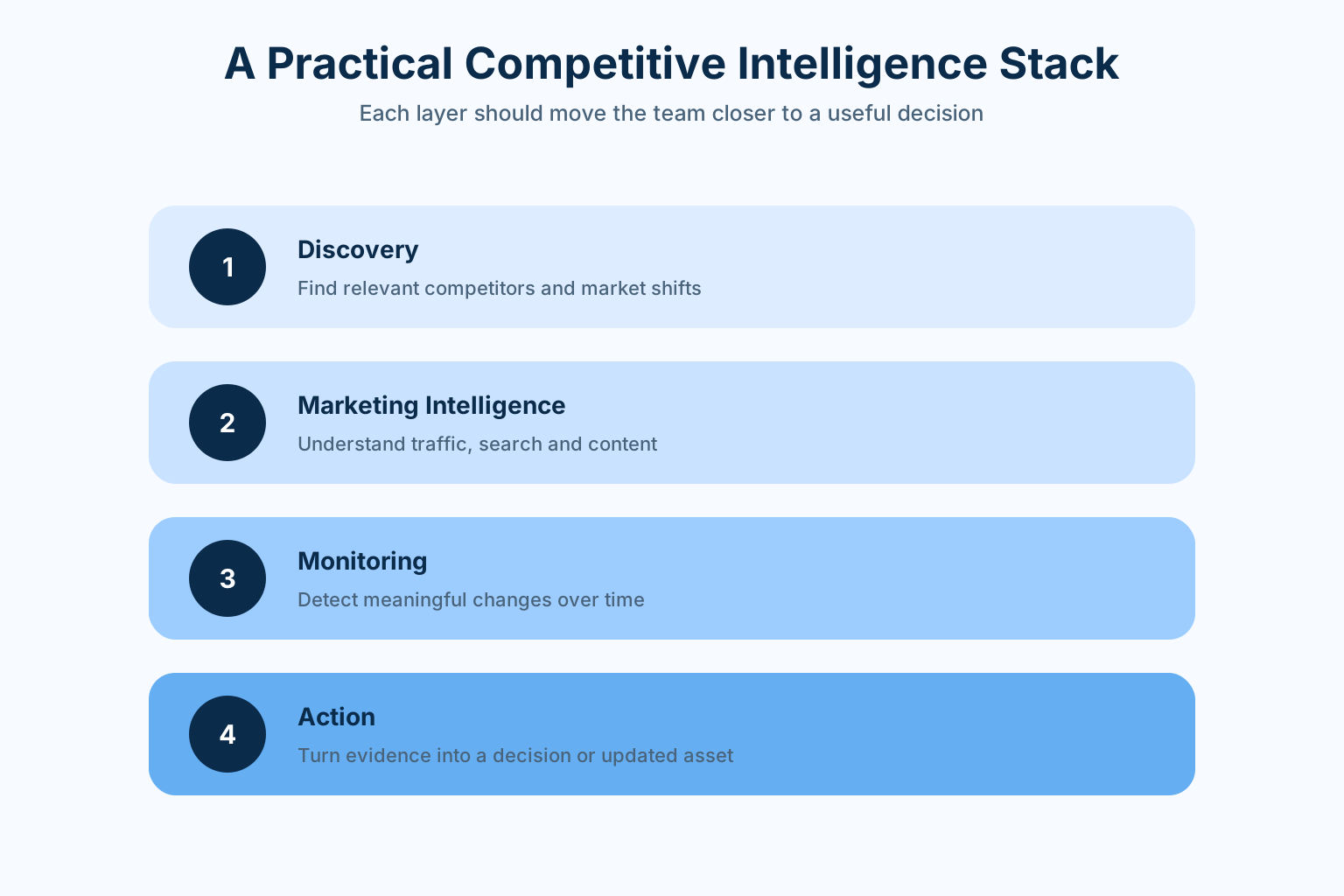
You do not necessarily need one tool that does everything.
A small, focused stack can often be more useful.
Consider four layers.
Layer 1: Discovery
Identify competitors and market changes.
Tools may include:
- Similarweb
- Feedly
- Owler
Layer 2: Marketing intelligence
Understand how competitors attract attention and customers.
Tools may include:
- Semrush
- BuzzSumo
- brand-monitoring platforms
Layer 3: Monitoring
Detect important changes after you know what to watch.
Tools may include:
- Visualping
- Feedly
- dedicated competitive-monitoring platforms
Layer 4: Action
Turn intelligence into decisions.
For sales organizations, that might mean Crayon or Klue.
For an ecommerce retailer, it could mean reviewing prices through Prisync.
For a content team, it might mean creating an editorial brief based on search and content gaps.
This final layer is important because competitive intelligence is only useful when someone acts on it.
What Competitive Intelligence Tools Cannot Tell You
Competitive intelligence has limits. External tools do not give you unrestricted access to a competitor's private analytics, internal roadmap, exact margins, customer database, or executive discussions.
You should also be careful about assuming intent. A competitor changing its homepage does not automatically prove it has changed its entire strategy.
A traffic estimate declining for one month does not automatically mean the business is failing.
A new pricing plan does not automatically mean its previous strategy was unsuccessful. Good competitive intelligence combines data with context.
Use tools to identify signals. Then investigate before making an important decision.
Final Takeaway
The best competitive intelligence tool is the one that improves a specific decision. Define the signal you need, choose a focused platform, verify important findings with context, and assign someone to act on the result. A small stack with clear ownership is usually more useful than a large collection of dashboards nobody reviews.